Use of stairs is required to access the building. Curatorial content is available in both English & Bangla. Please write to us at info@triartandculture.com for any unlisted accessibility support.
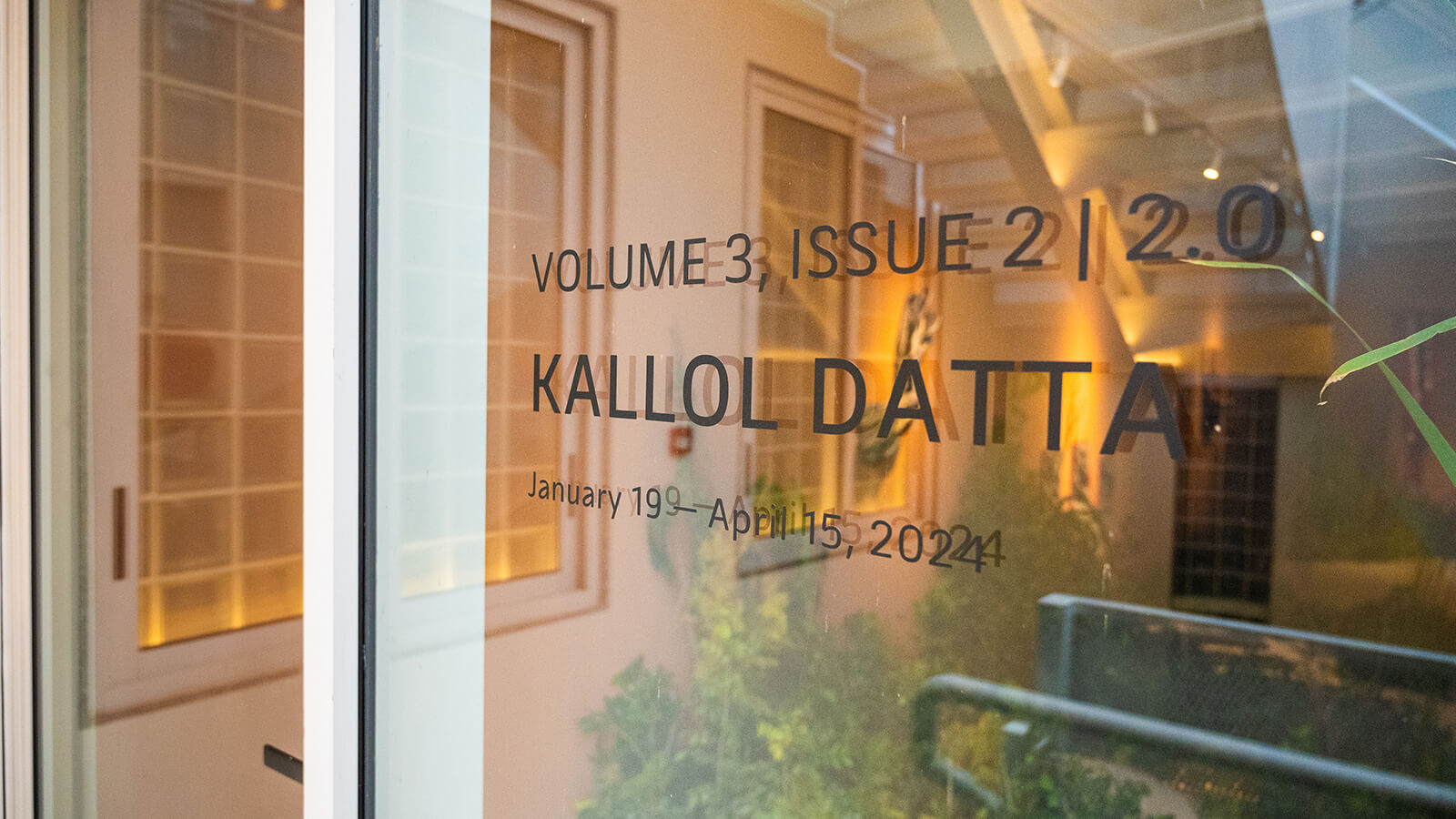
Volume 3, Issue 2 | 2.0 explores how clothing patterns reflect and reveal social patterns turns to unconventional garment-making methods as a meditation on human behavior, memory, and cultural continuity.
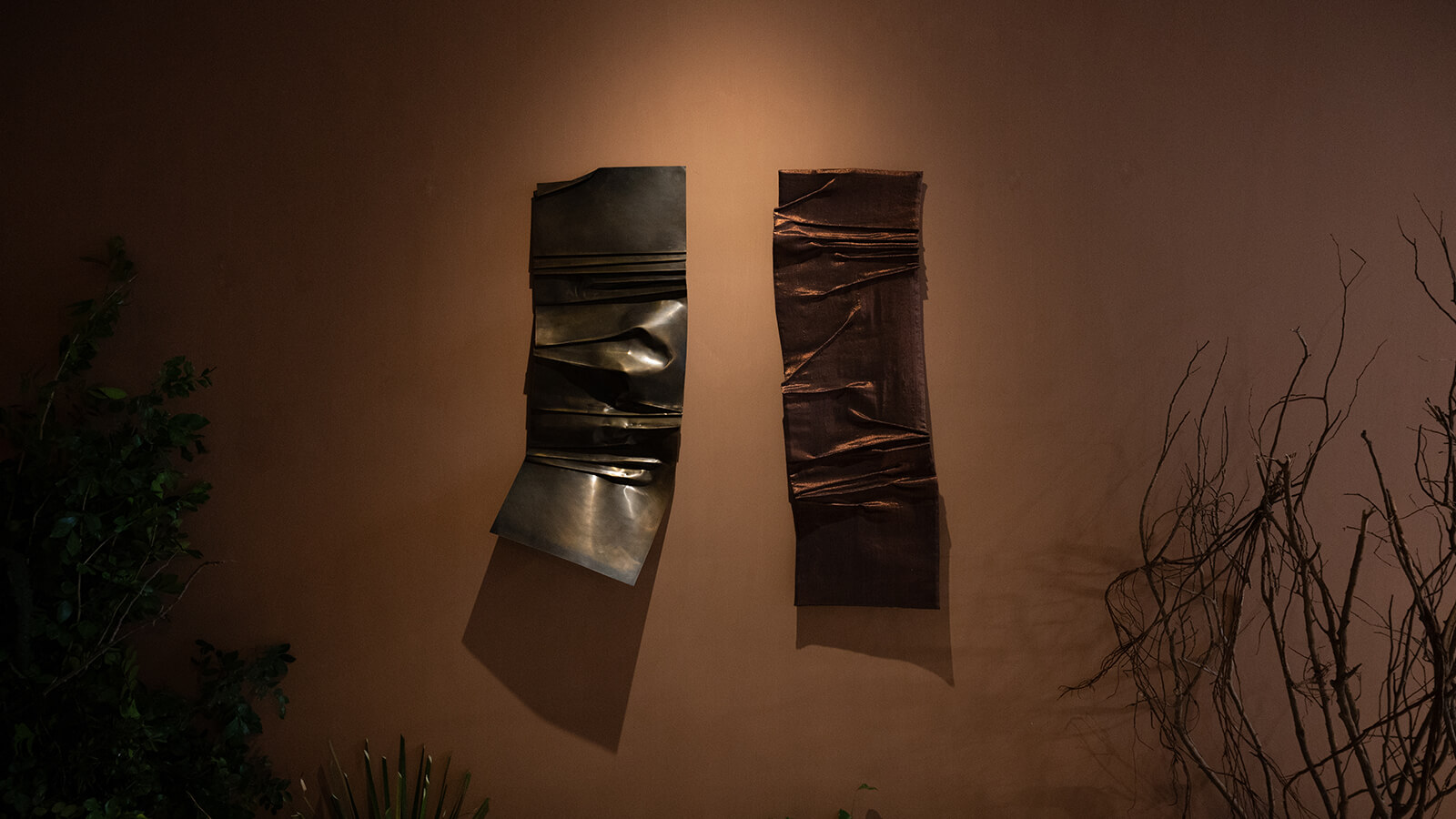
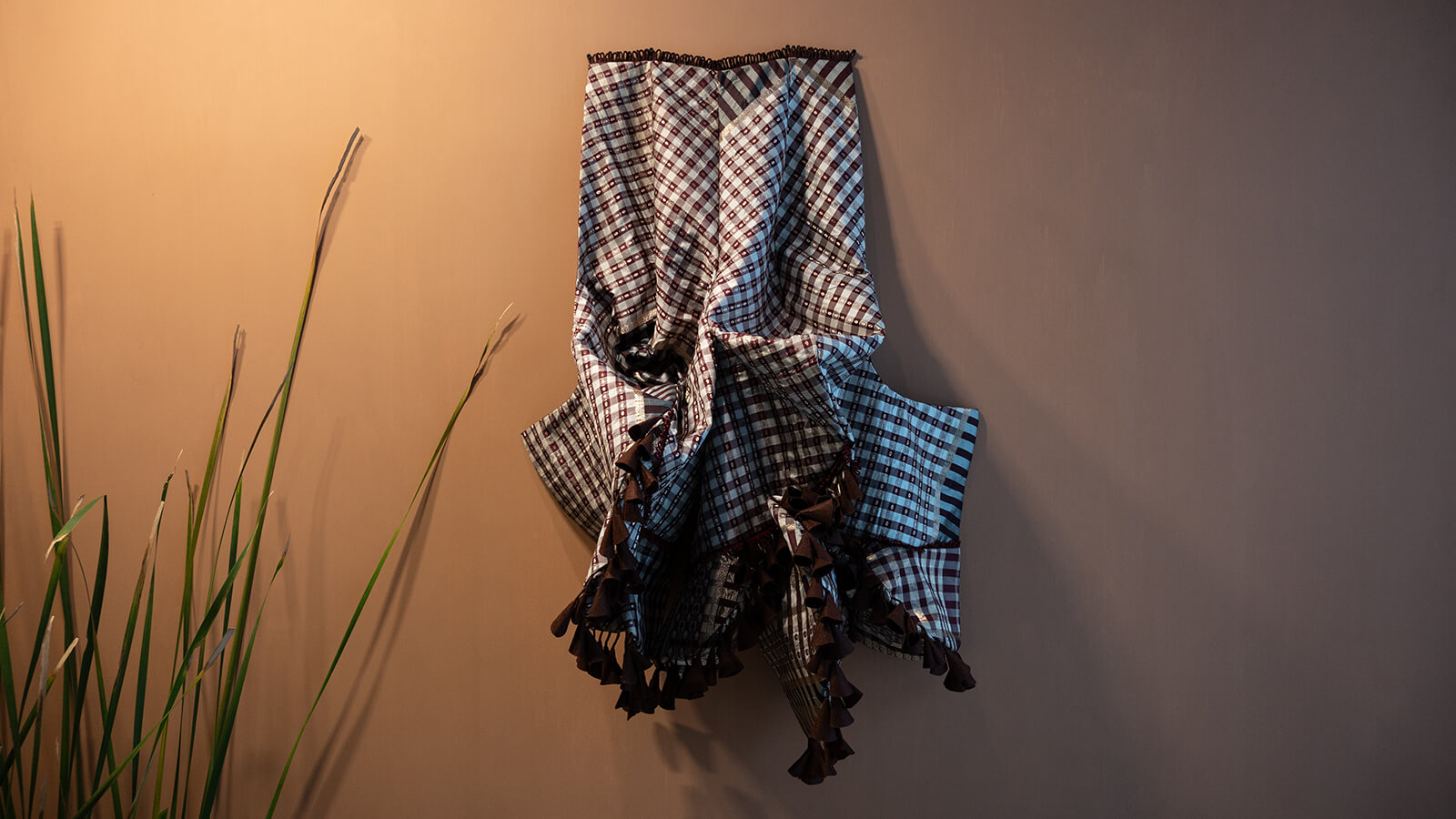
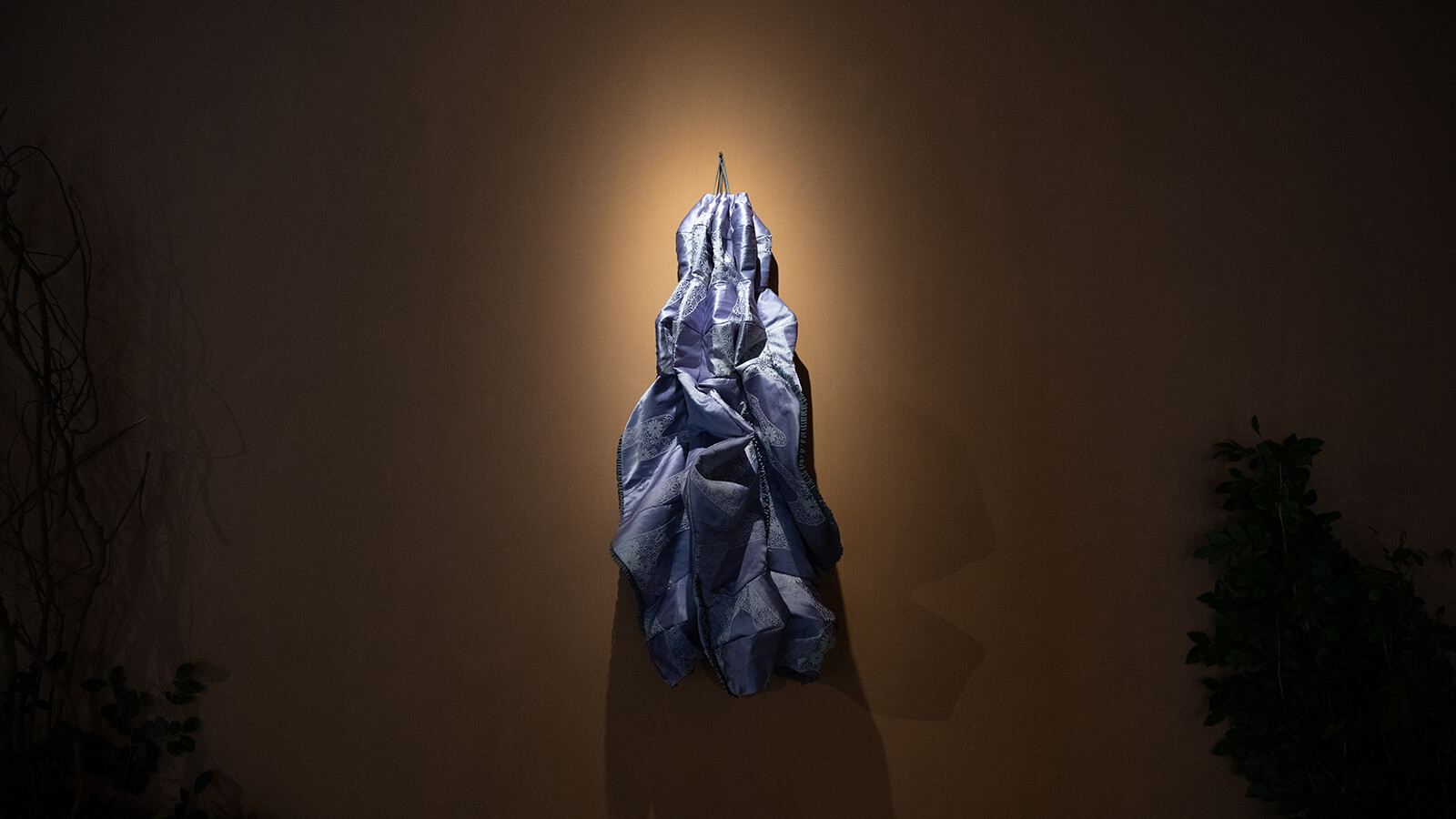
Volume 3, Issue 2 | 2.0 by Kallol Datta abstracts the concept of a garment to investigate how properties of behavioral change inform the patterns, textures, contours, and dimensions of textile objects as the shadows of social fabrics.
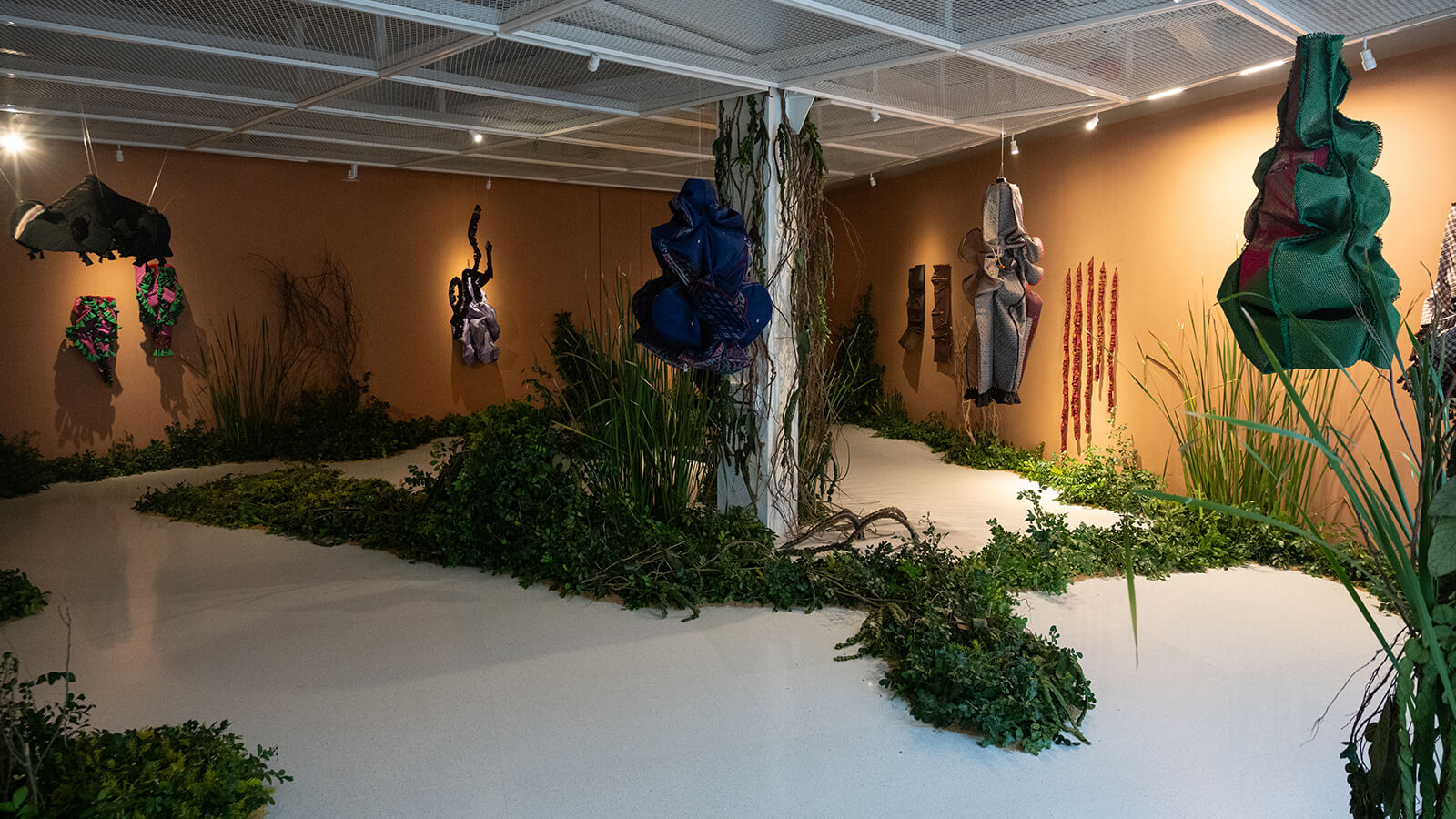
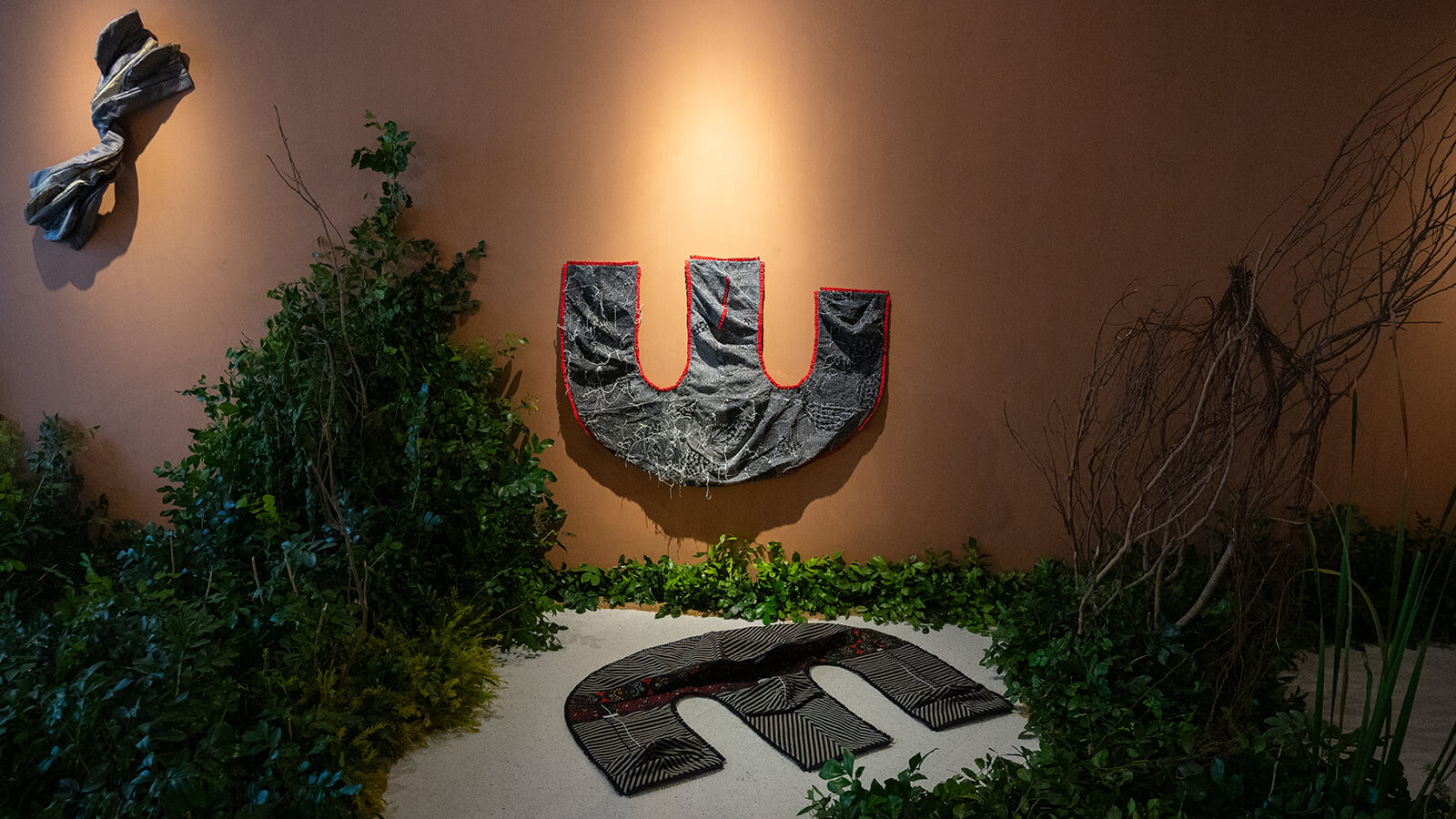
A continuation of the artist’s ongoing inquiry into native clothing practices across South-West Asia, North Africa, the Indian Subcontinent, and the Korean Peninsula, this exhibition presents Datta’s signature process of deformation as reformation. This edition emphasizes clothing items donated from Manipur, India, and the Aomori prefecture of Japan. Set against a decaying organic environment, the viewer is prompted to consider what legacy remains when fabrics once meant for wearing become worn; how form informs life, and life informs form.
Introduction
Volume 3, Issue 2 | 2.0 by Kallol Datta abstracts the concept of a garment to investigate how properties of behavioral change inform the patterns, textures, contours, and dimensions of textile objects as the shadows of social fabrics.
A continuation of the artist’s ongoing inquiry into native clothing practices across South-West Asia, North Africa, the Indian Subcontinent, and the Korean Peninsula, this exhibition presents Datta’s signature process of deformation as reformation. This edition emphasizes clothing items donated from Manipur, India, and the Aomori prefecture of Japan. Set against a decaying organic environment, the viewer is prompted to consider what legacy remains when fabrics once meant for wearing become worn; how form informs life, and life informs form.
About The Artists
Kallol Datta
Kallol Datta is a Kolkata-based clothes maker celebrated for exploring clothing practices across South-West Asia, North Africa, the Indian Subcontinent, and the Korean Peninsula. Their practice blends extensive research with innovative design to redefine traditional and contemporary fashion narratives.
Datta debuted with a solo show at Experimenter Gallery, Kolkata (2017), and participated in residencies including KHOJ, New Delhi, and T.A.J. Residency, Bengaluru. They have been recognized with the Arts Network Asia Grant (2019), as a finalist for the Jameel Prize (2021), and as a winner of the TAF London Emerging Artist Awards (2022).
Datta’s global research and practice have been showcased at venues including the Victoria and Albert Museum, Edinburgh’s National Museums, and Nomad Monaco. In 2023, Datta curated the inaugural Kolkata Queer Arts Month, and in 2024 served as interlocutor at the State of Fashion Biennale, Arnhem, cementing their role in discourse on fashion’s relationship to identity and culture.
This exhibition invites audiences to engage with clothing as both object and metaphor, reflecting on the interplay between material, memory, and cultural practice. Each piece encourages contemplation on how textiles carry stories of life, wear, and transformation.
About the Artists
Kallol Datta
Kallol Datta is a Kolkata-based clothes maker celebrated for exploring clothing practices across South-West Asia, North Africa, the Indian Subcontinent, and the Korean Peninsula. Their practice blends extensive research with innovative design to redefine traditional and contemporary fashion narratives.
Datta debuted with a solo show at Experimenter Gallery, Kolkata (2017), and participated in residencies including KHOJ, New Delhi, and T.A.J. Residency, Bengaluru. They have been recognized with the Arts Network Asia Grant (2019), as a finalist for the Jameel Prize (2021), and as a winner of the TAF London Emerging Artist Awards (2022).
Datta’s global research and practice have been showcased at venues including the Victoria and Albert Museum, Edinburgh’s National Museums, and Nomad Monaco. In 2023, Datta curated the inaugural Kolkata Queer Arts Month, and in 2024 served as interlocutor at the State of Fashion Biennale, Arnhem, cementing their role in discourse on fashion’s relationship to identity and culture.