


Presented as part of Bengal Biennale 2026–27, co-curated by Ritika Biswas and Chander Haat, this exhibition brings together three works from South Korean artist Ayoung Kim’s ongoing Delivery Dancer series. Set in a fictional, labyrinthine Seoul, the works follow Ernst Mo, a female delivery rider whose movements are directed by AI-optimised routes. When a rupture in time and space leads her to En Storm, a near-double from a parallel reality, the seemingly fixed paths of her world begin to open onto other possibilities.
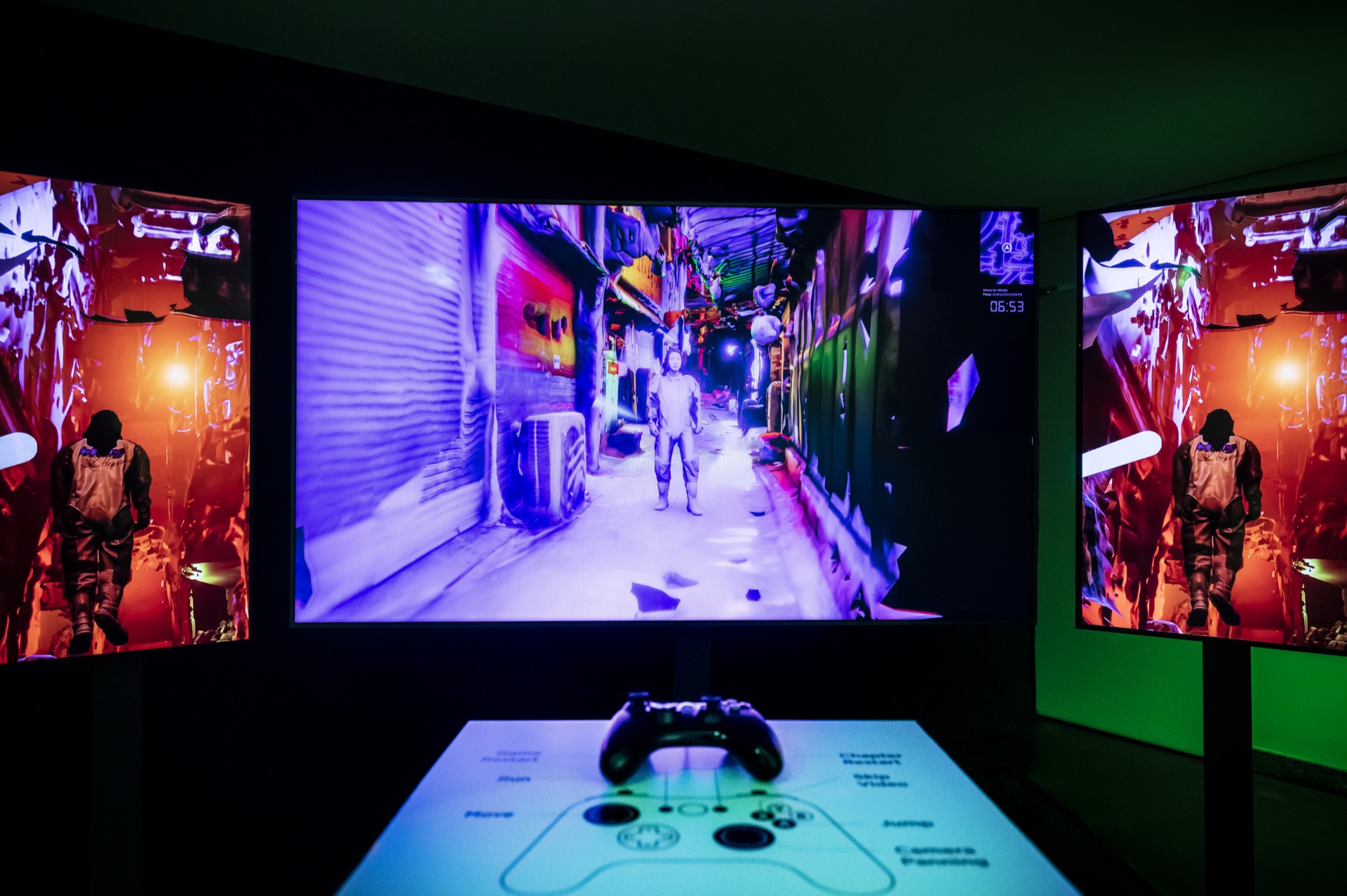
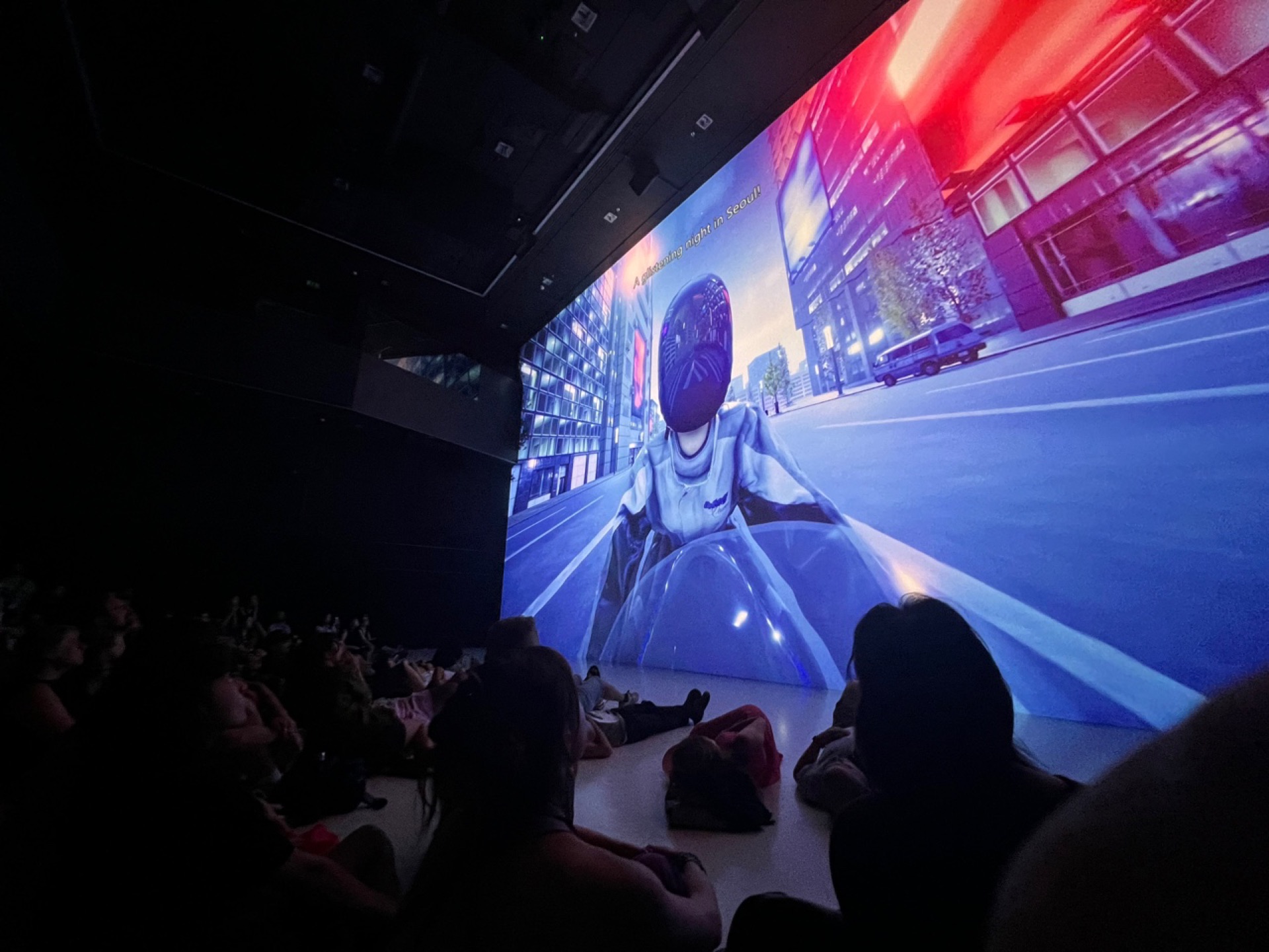
In Delivery Dancer’s Sphere (2022), presented in the Ground Floor Gallery, this encounter unfolds through a 25-minute film that moves between alternate realities. On the First Floor, Delivery Dancer Simulation (2022) places visitors in the role of a delivery rider racing against the clock, bringing the pressures of platform labour into an interactive game. Alongside it, Evening Peak Time Is Back (2022), featuring character illustrations by 1172, draws on the visual language of yuri, a genre of fiction centred on romantic relationships between women, to explore moments of intimacy and friction between Ernst Mo and En Storm.
Moving between digital worlds and lived realities, Kim’s works examine how technology, speed, and systems of optimisation influence human experiences. In the context of India’s growing delivery-based gig economy, the exhibition invites audiences to reflect on the relationship between labour, identity, and personal agency, while considering how unexpected encounters and departures from prescribed paths might open possibilities for different futures.
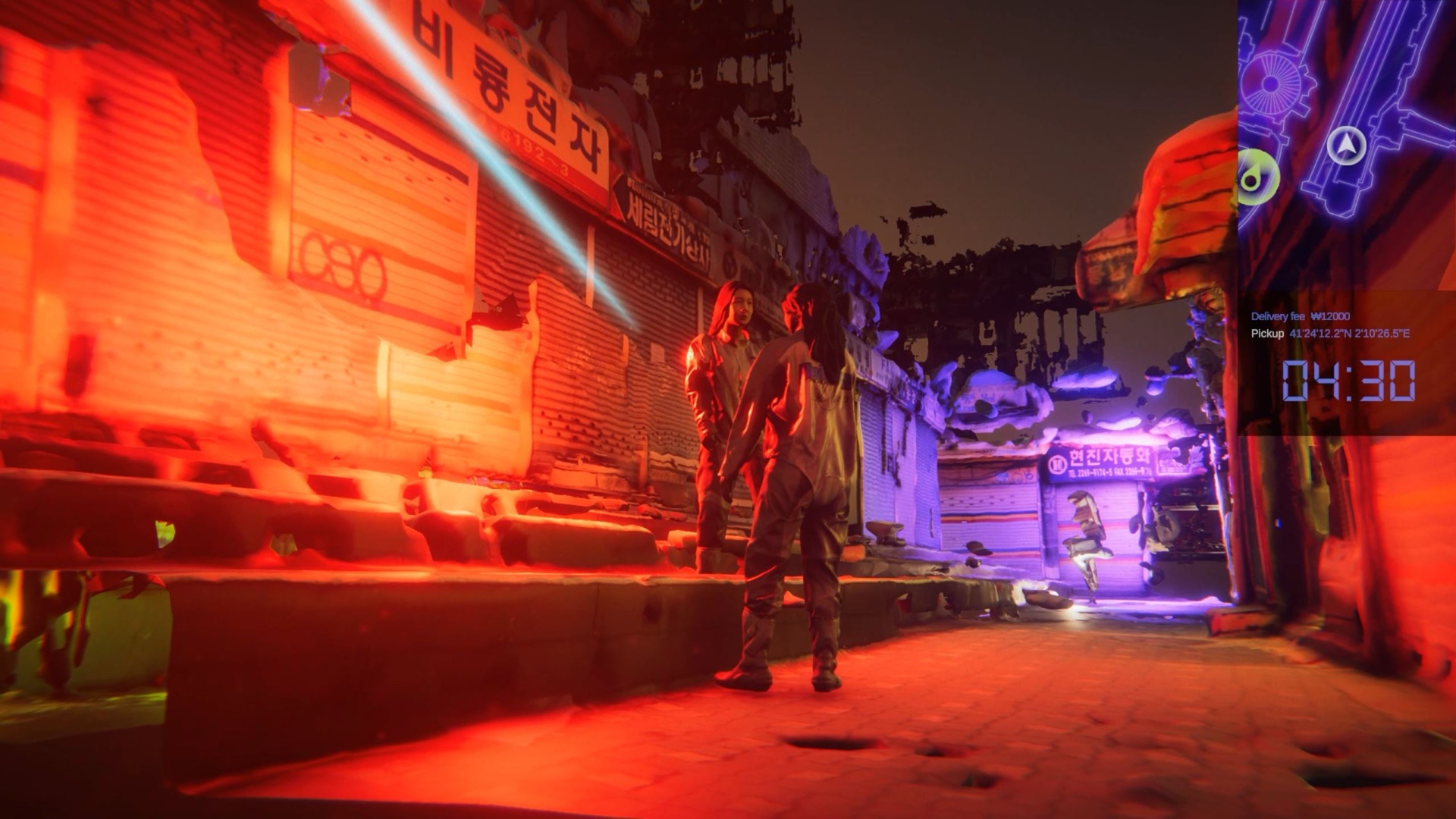
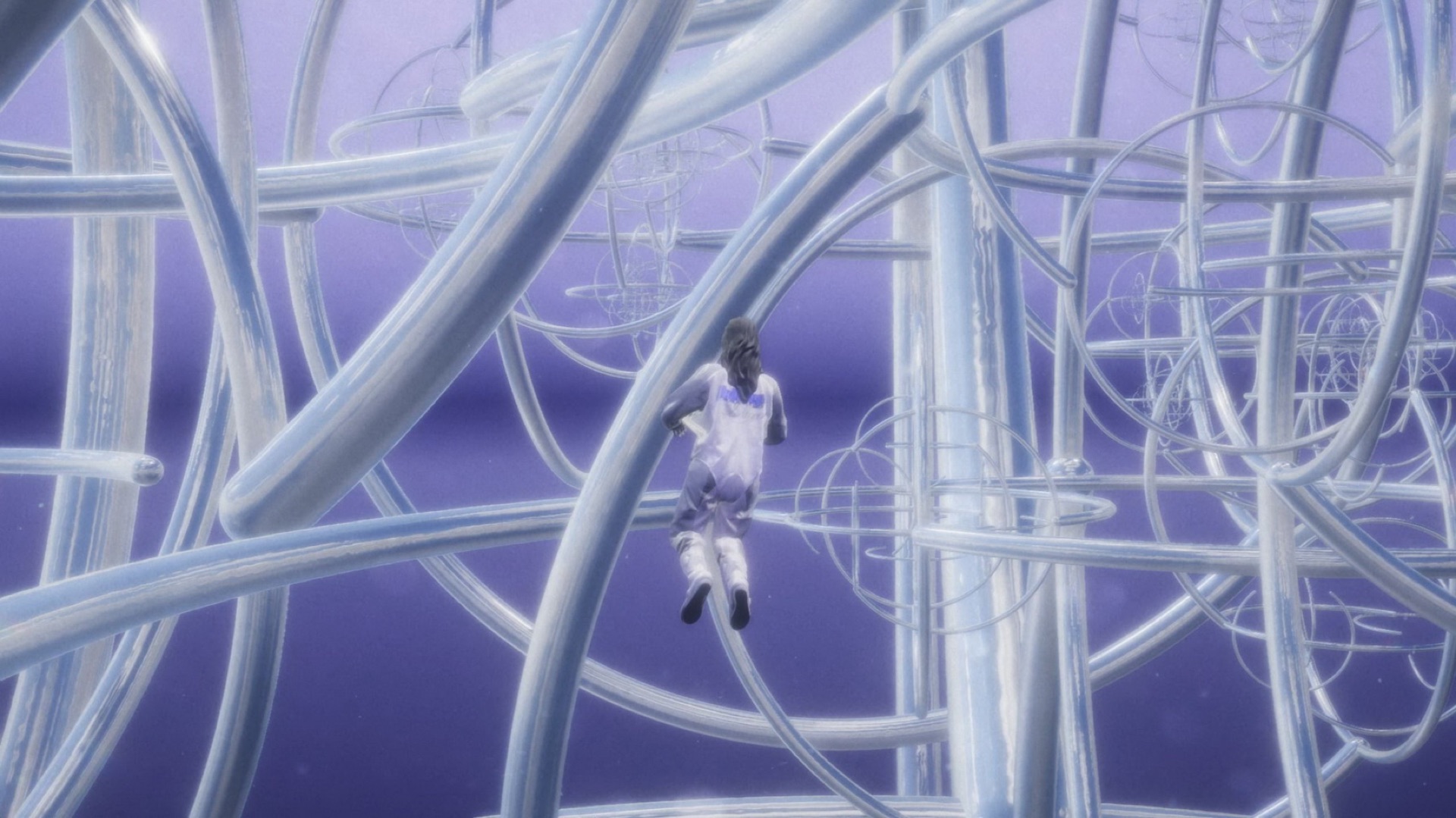
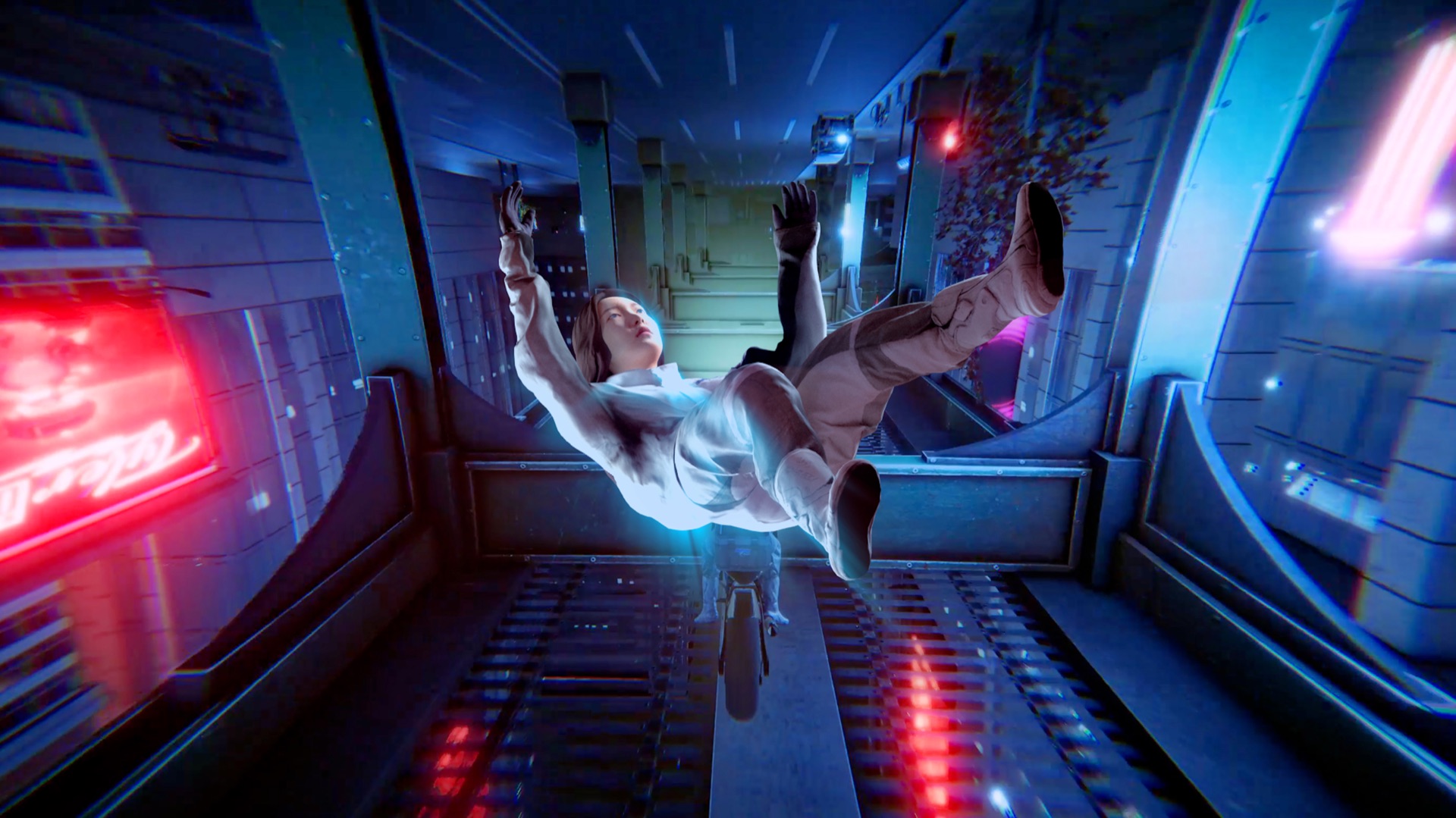
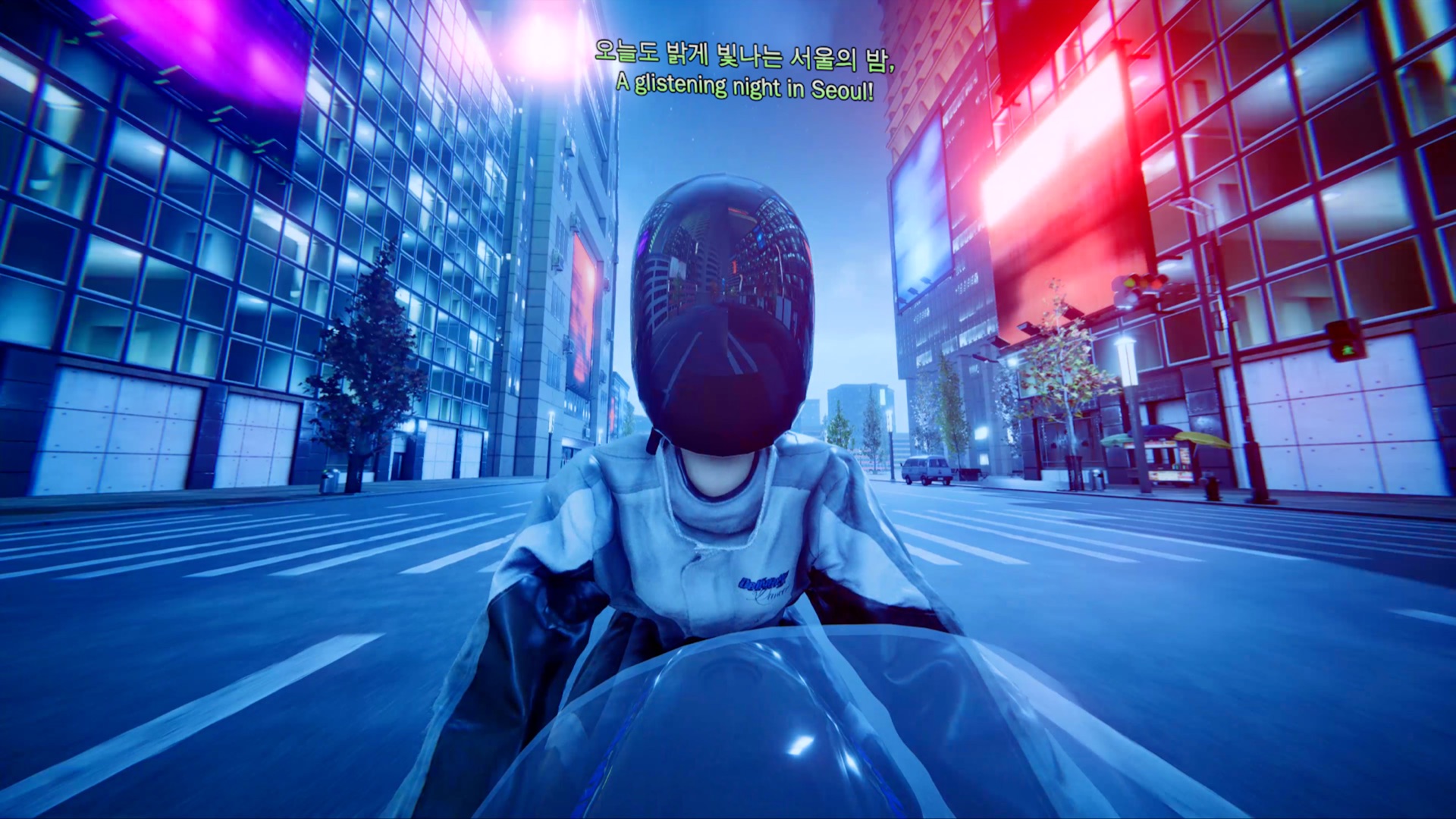
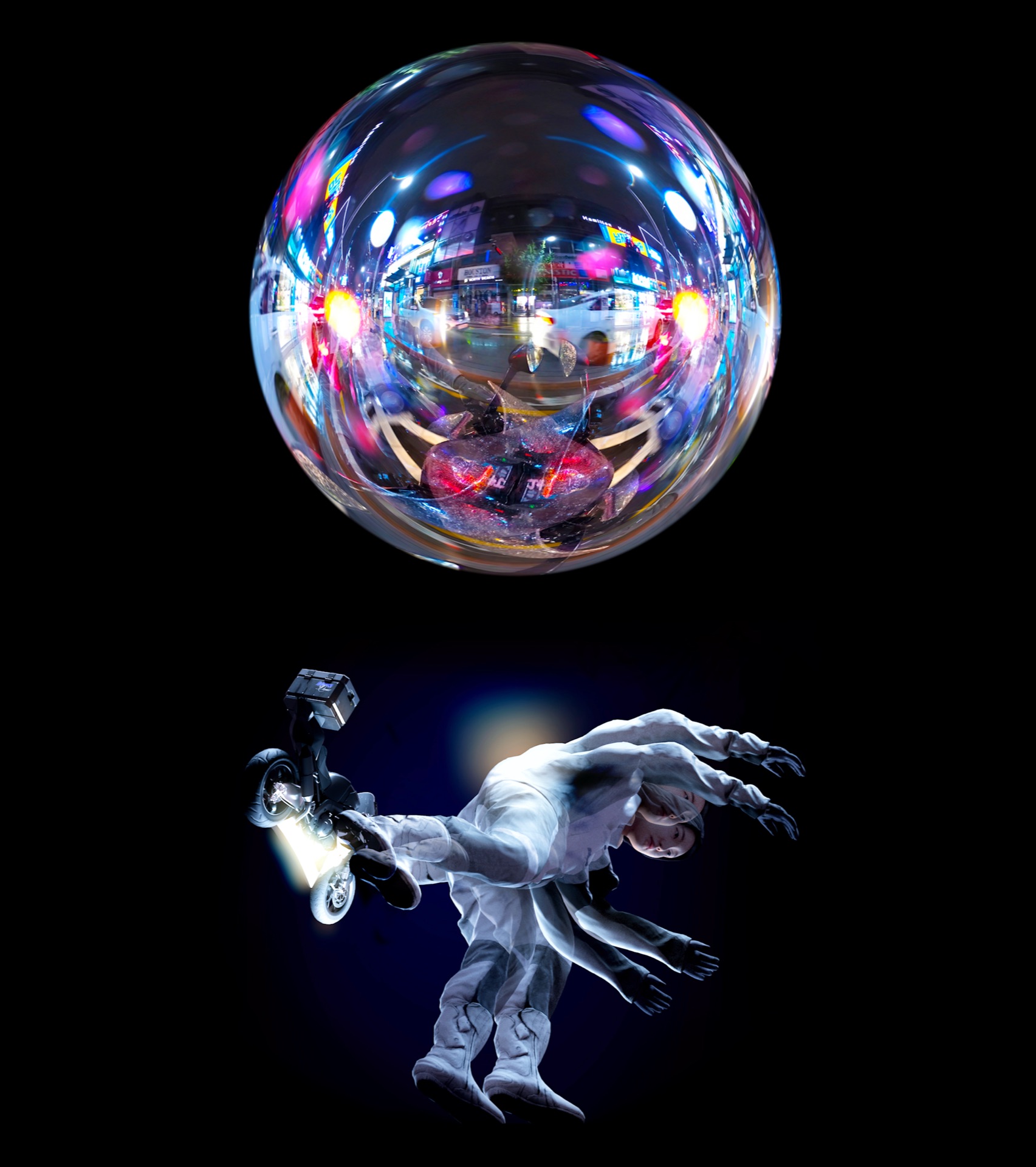
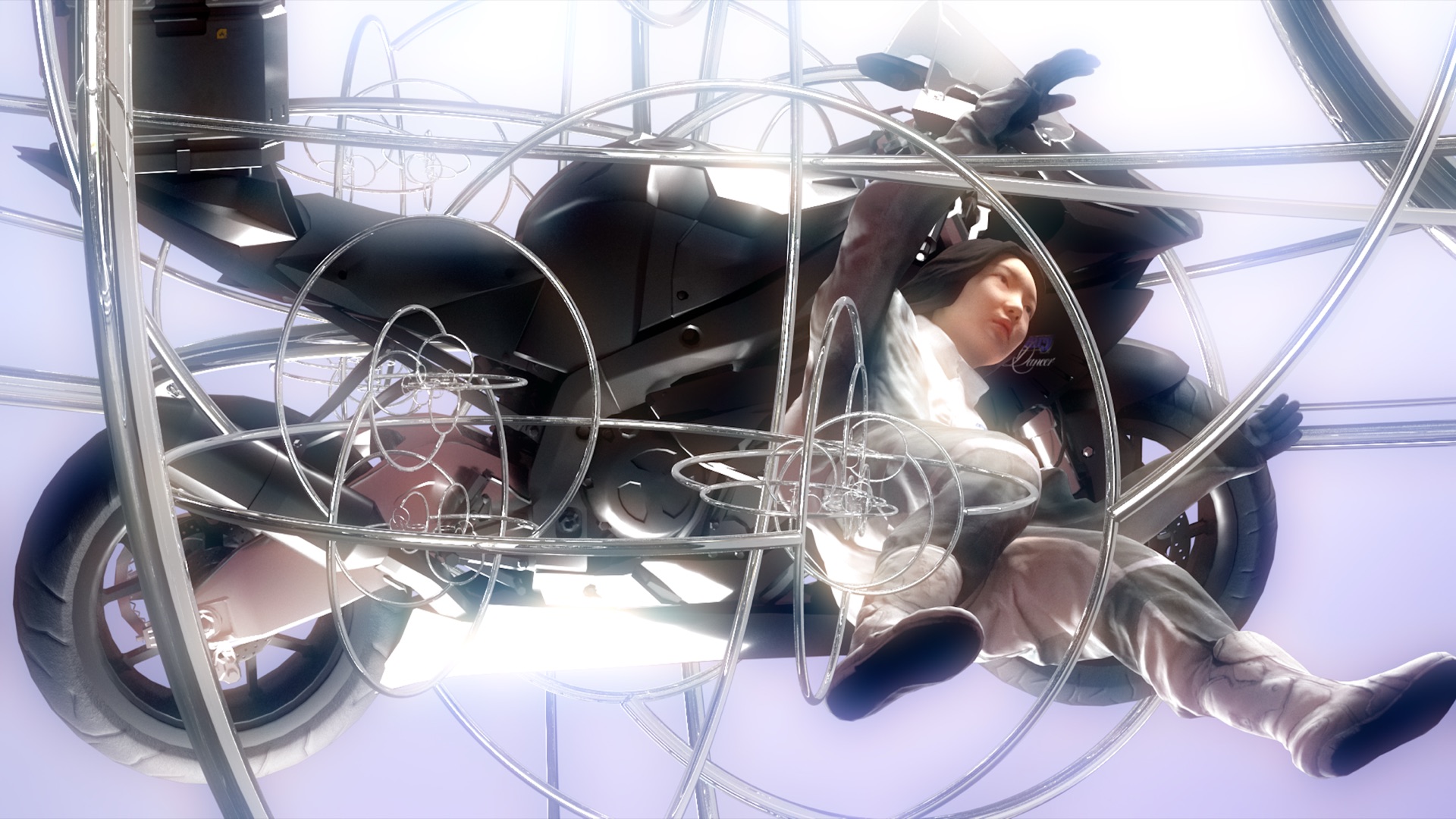
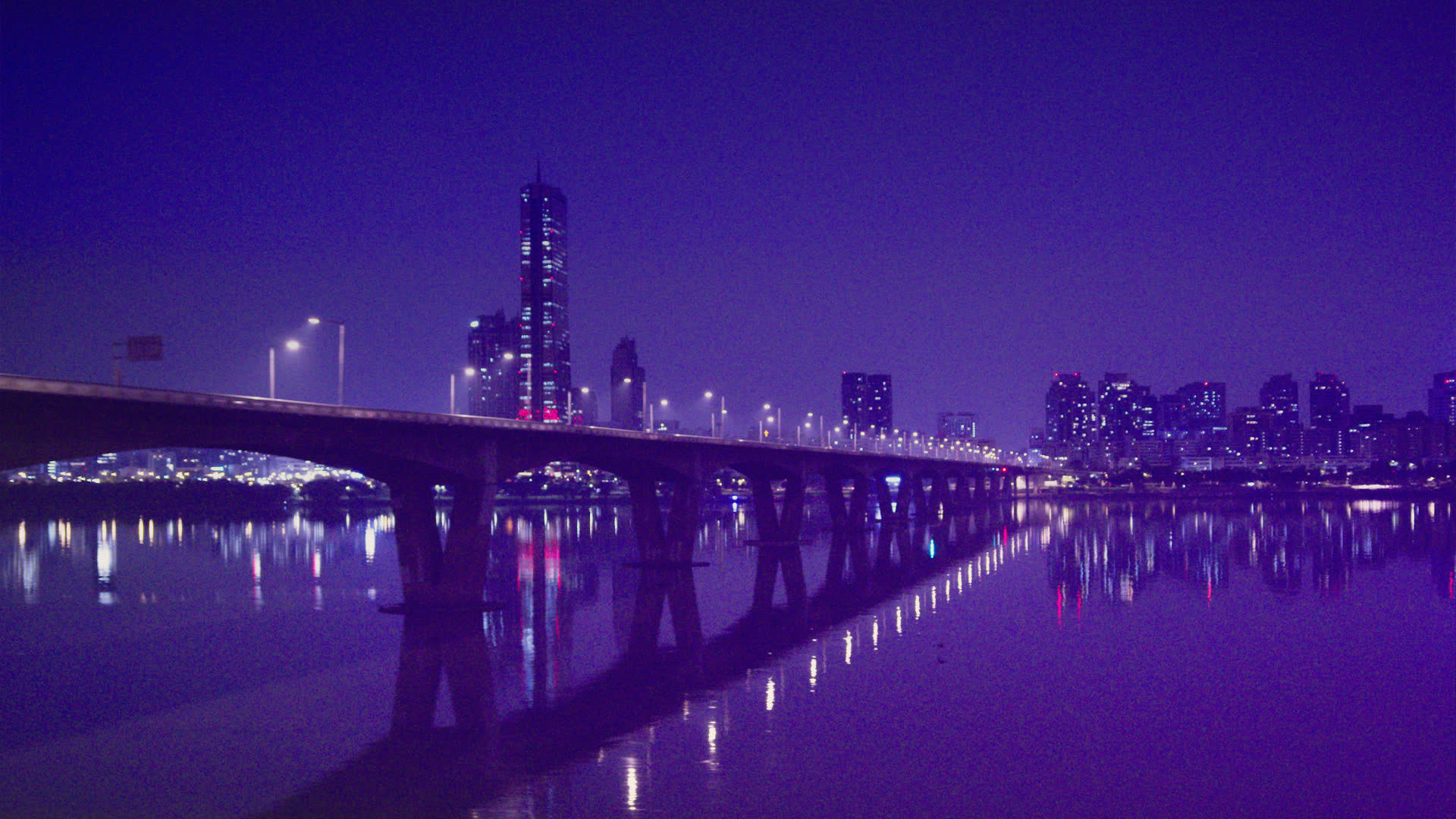
Presented as part of Bengal Biennale 2026–27, co-curated by Ritika Biswas and Chander Haat, this exhibition brings together three works from South Korean artist Ayoung Kim’s ongoing Delivery Dancer series. Set in a fictional, labyrinthine Seoul, the works follow Ernst Mo, a female delivery rider whose movements are directed by AI-optimised routes. When a rupture in time and space leads her to En Storm, a near-double from a parallel reality, the seemingly fixed paths of her world begin to open onto other possibilities.
In Delivery Dancer’s Sphere (2022), presented in the Ground Floor Gallery, this encounter unfolds through a 25-minute film that moves between alternate realities. On the First Floor, Delivery Dancer Simulation (2022) places visitors in the role of a delivery rider racing against the clock, bringing the pressures of platform labour into an interactive game. Alongside it, Evening Peak Time Is Back (2022), featuring character illustrations by 1172, draws on the visual language of yuri, a genre of fiction centred on romantic relationships between women, to explore moments of intimacy and friction between Ernst Mo and En Storm.
Moving between digital worlds and lived realities, Kim’s works examine how technology, speed, and systems of optimisation influence human experiences. In the context of India’s growing delivery-based gig economy, the exhibition invites audiences to reflect on the relationship between labour, identity, and personal agency, while considering how unexpected encounters and departures from prescribed paths might open possibilities for different futures.
Ritika Biswas
Ritika Biswas is an independent curator and artistic researcher from Kolkata whose practice focuses on ecological justice, necropolitics, and experimental media. She previously served as a curator at New Art Exchange in the United Kingdom and as Artistic Director of the Busan Biennale’s 2021 Sea Art Festival. Her recent curatorial projects include exhibitions at Project 88, Mumbai; the 15th Gwangju Biennale; Fondation Fiminco, Paris; and 421, Abu Dhabi.
Chander Haat
Chander Haat is an artist collective and community space based in Sarsuna, Kolkata. Its practice is rooted in socio-political and ecological engagement with local communities, alongside a longstanding involvement in designing Durga Puja. Its members maintain independent artistic practices while working collectively to explore the intersections of art, community, and cultural expression. Chander Haat was awarded the Vivan Sundaram Grant for Installation Art in 2024.
Ayoung Kim gazes at the myriad layers and peripheral forms of the ever-shifting contemporary world, constructing distorted world-versions by weaving extrapolative devices into her fiction. The estranged realities she creates continue moving forward, assuming their own autonomies. Her practice incorporates discourses on optical and post-optical media, machine vision, performativity, game simulation, and the narrativity of fiction. Her multidisciplinary practice spans a wide range of media, including video and moving image, game simulation, performance, installation, extended reality, and sound.
Kim has held solo exhibitions at Van Abbemuseum, Eindhoven (2026); MoMA PS1, New York (2025); Hamburger Bahnhof, Berlin (2025); Atelier Hermès, Seoul (2025); ACMI, Melbourne (2024); Palais de Tokyo, Paris (2016) and is a recipient of the Lee Jung-seop Art Prize (2026), the CHANEL Next Prize (2026), the LG Guggenheim Award (2025), the ACC Future Prize (2024), and the Golden Nica Award at Prix Ars Electronica (2023).
Contact Us