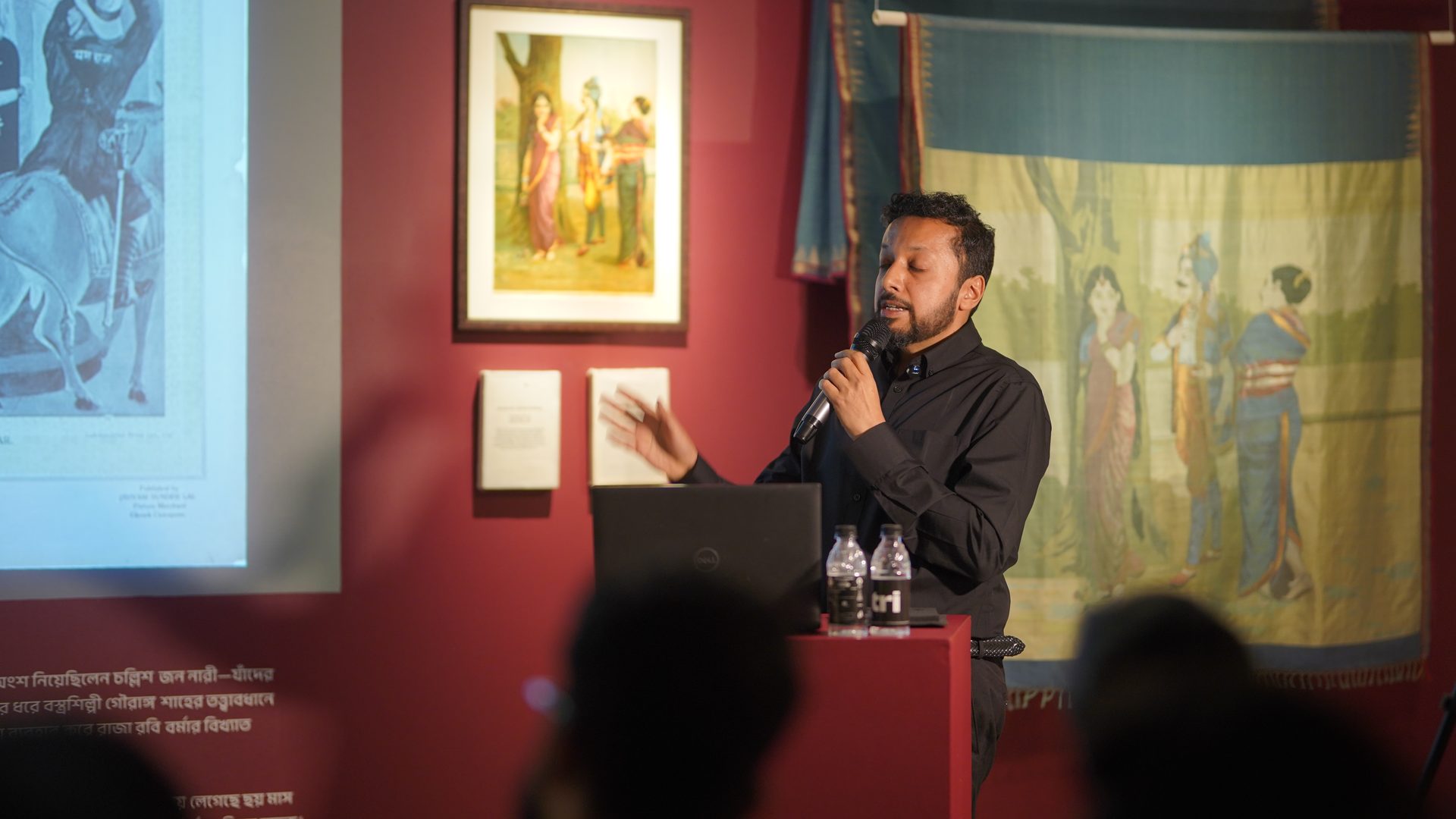
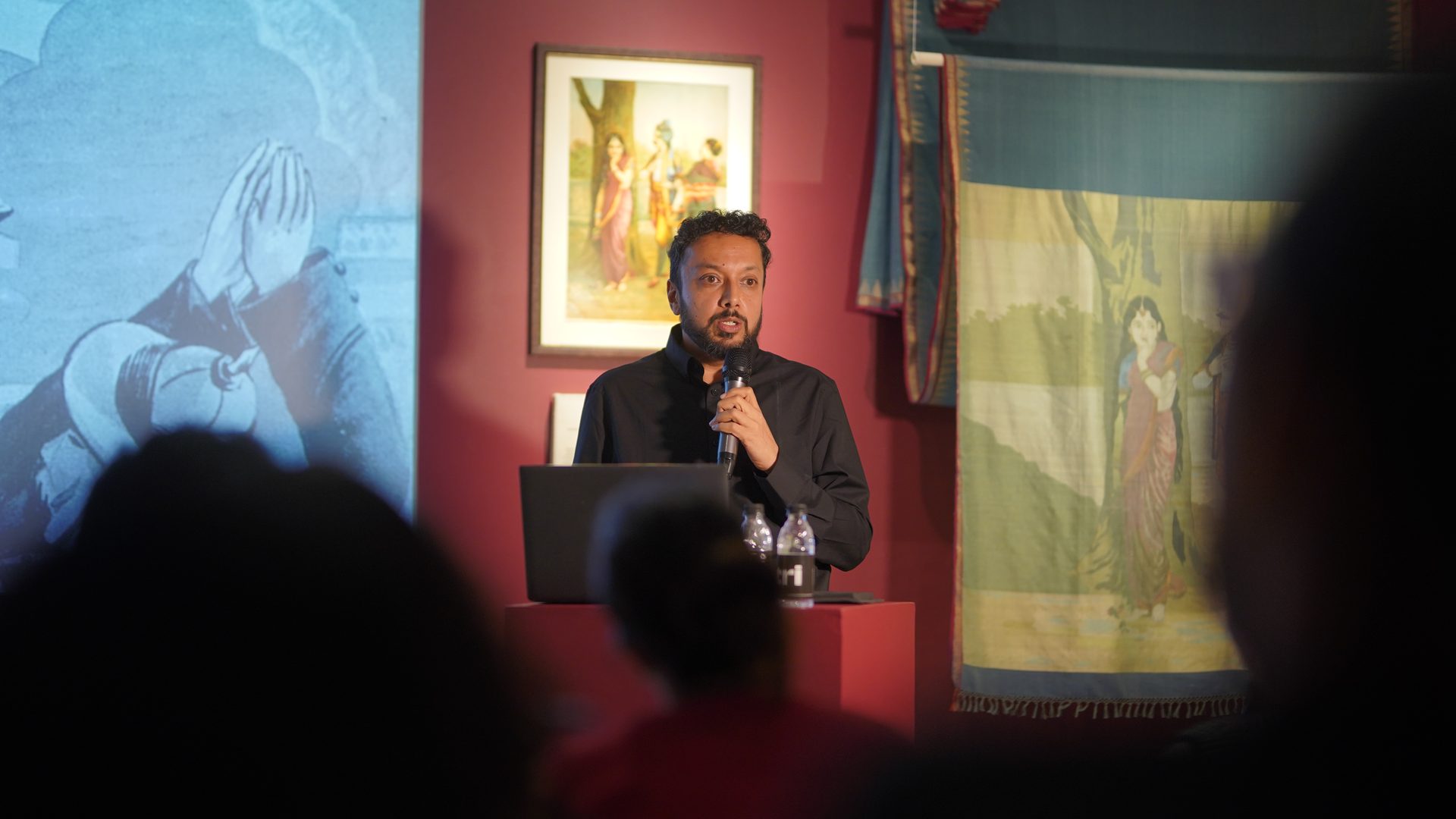
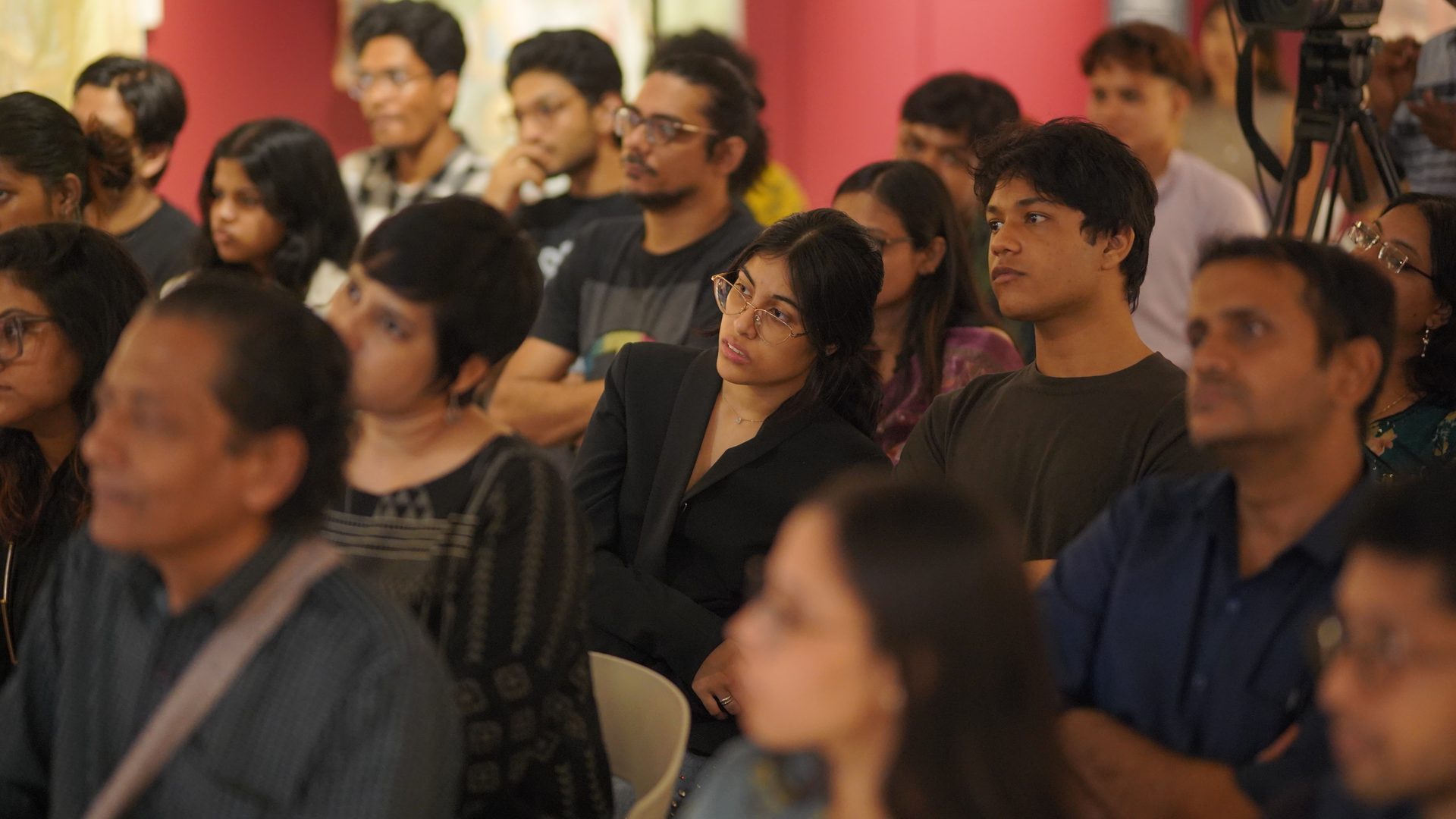
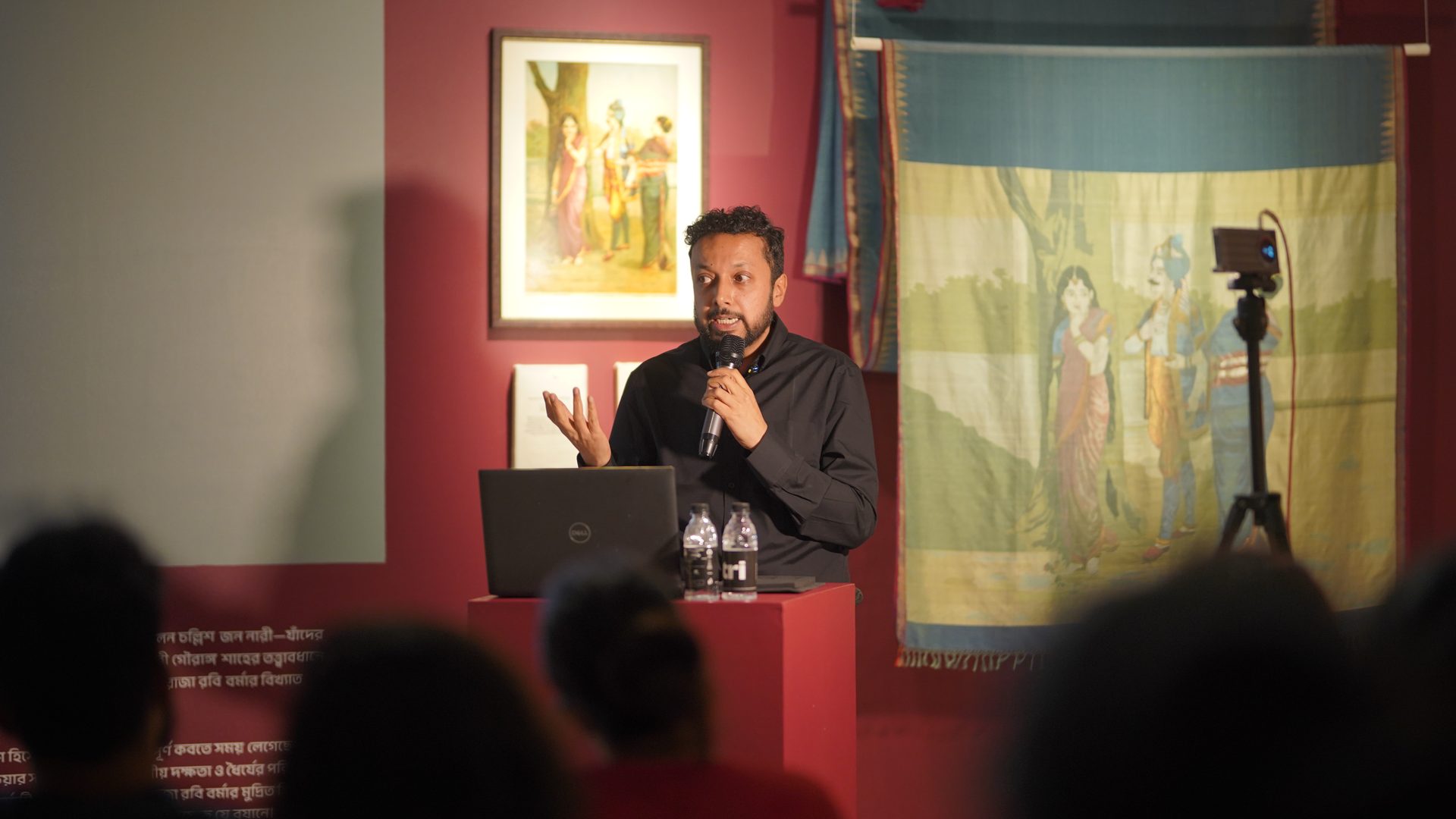
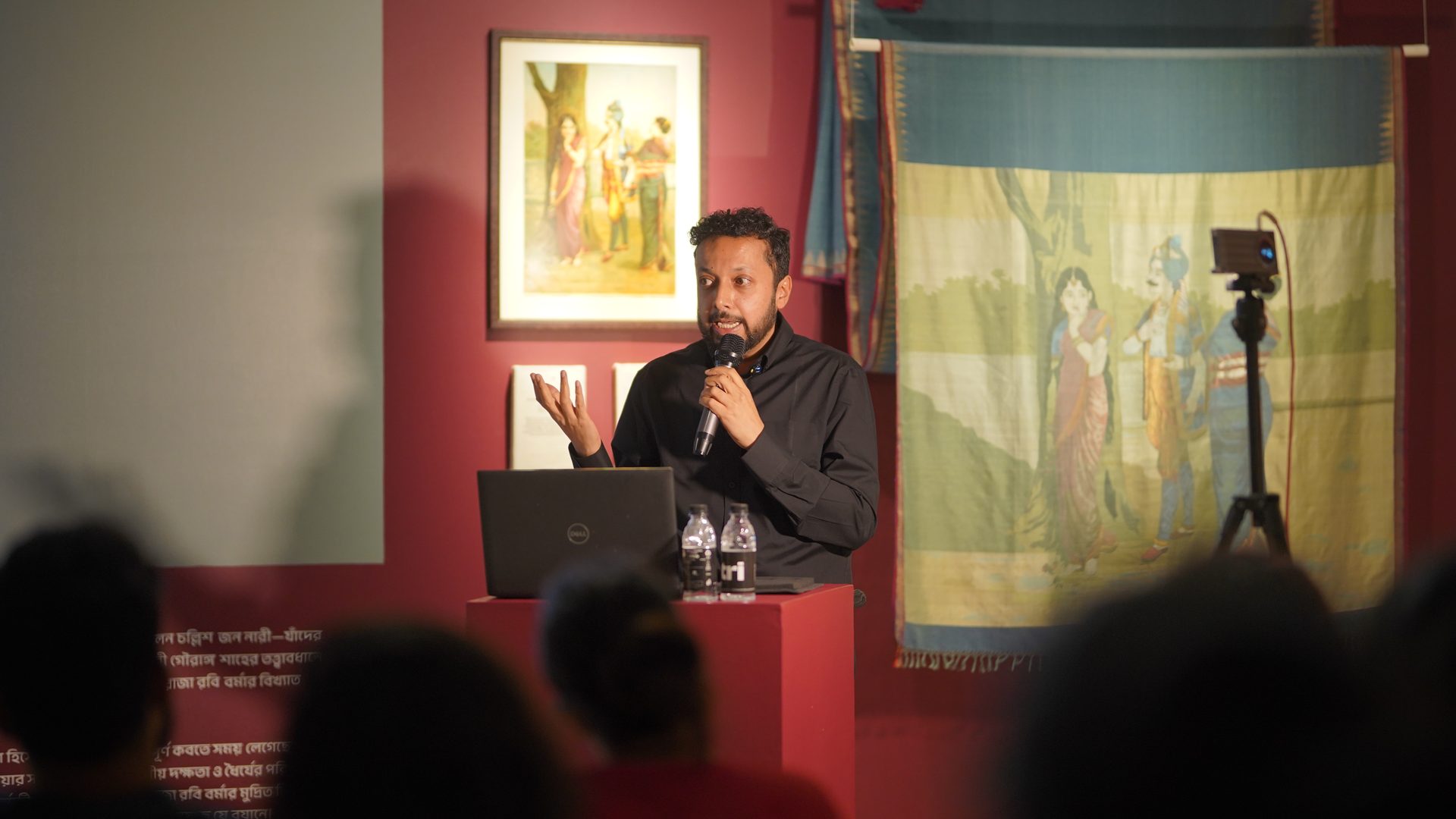
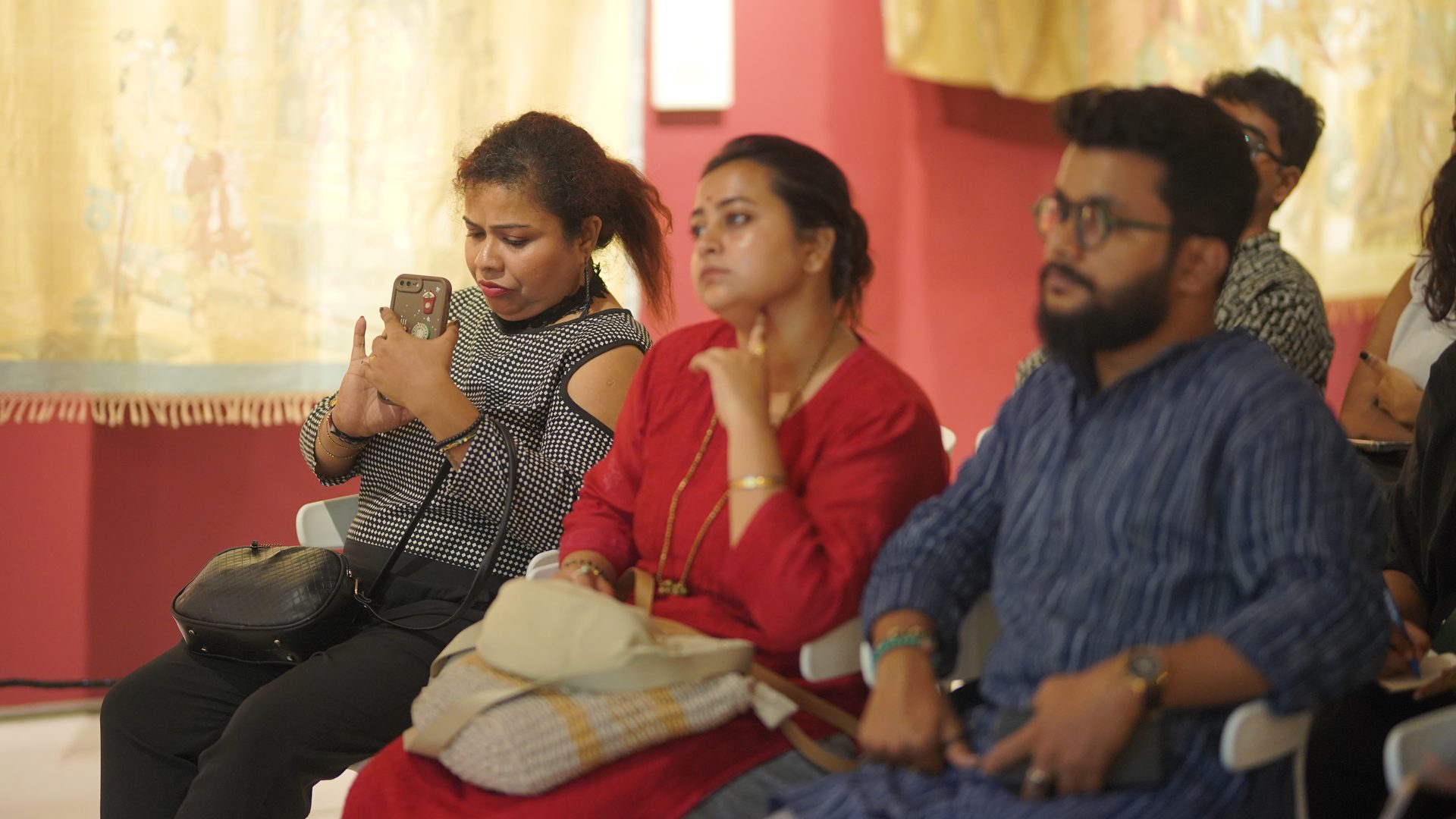
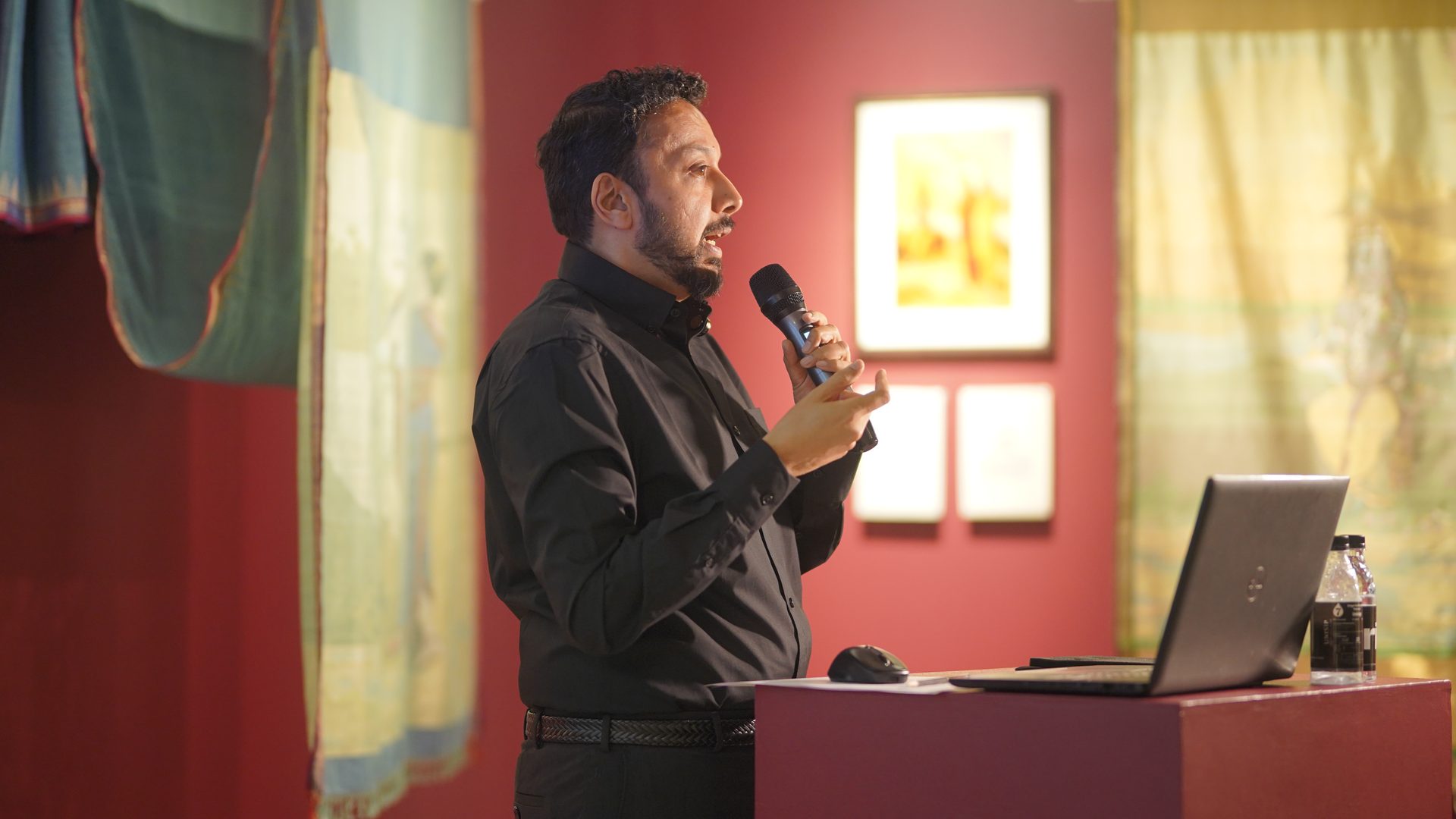
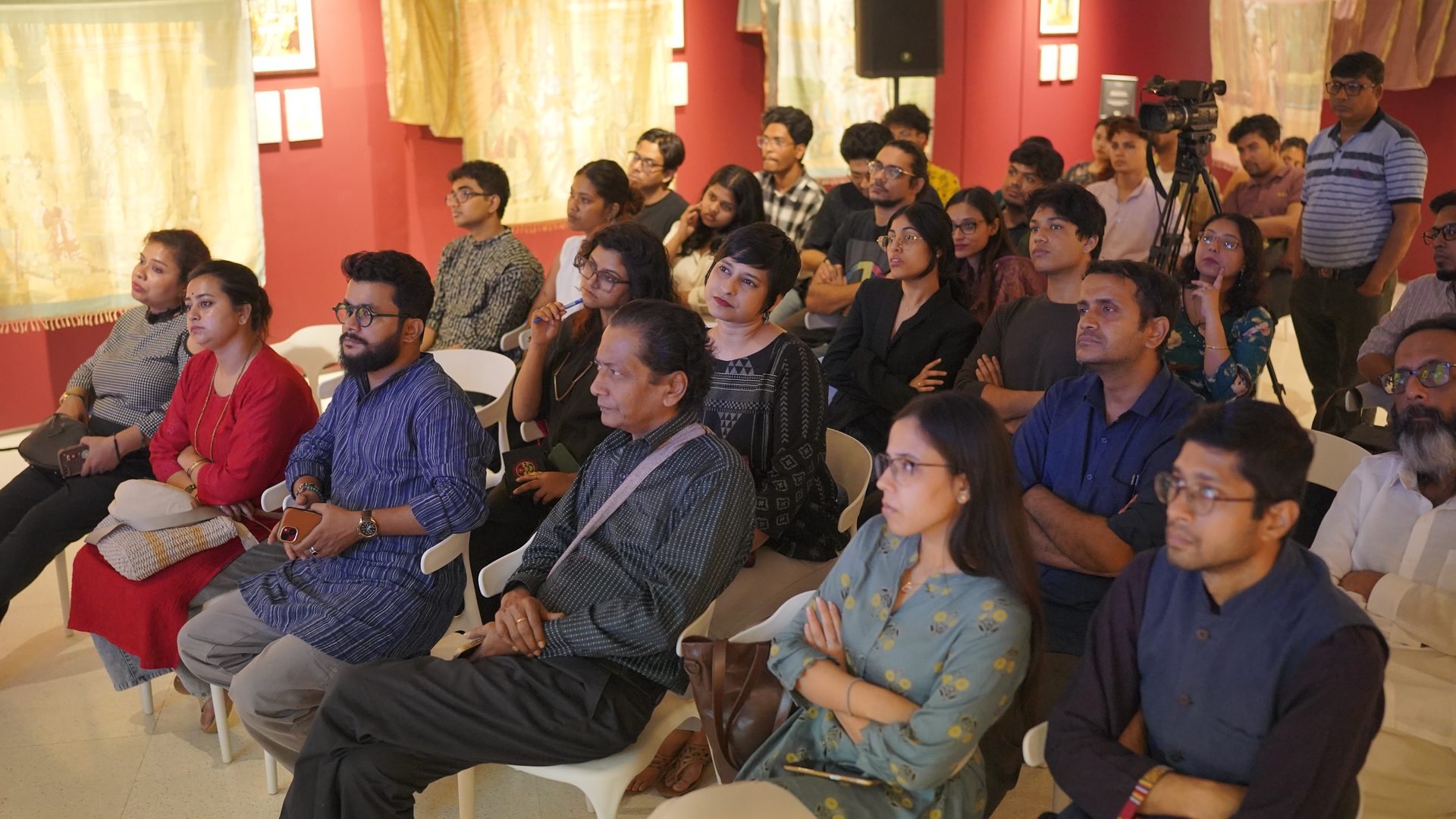
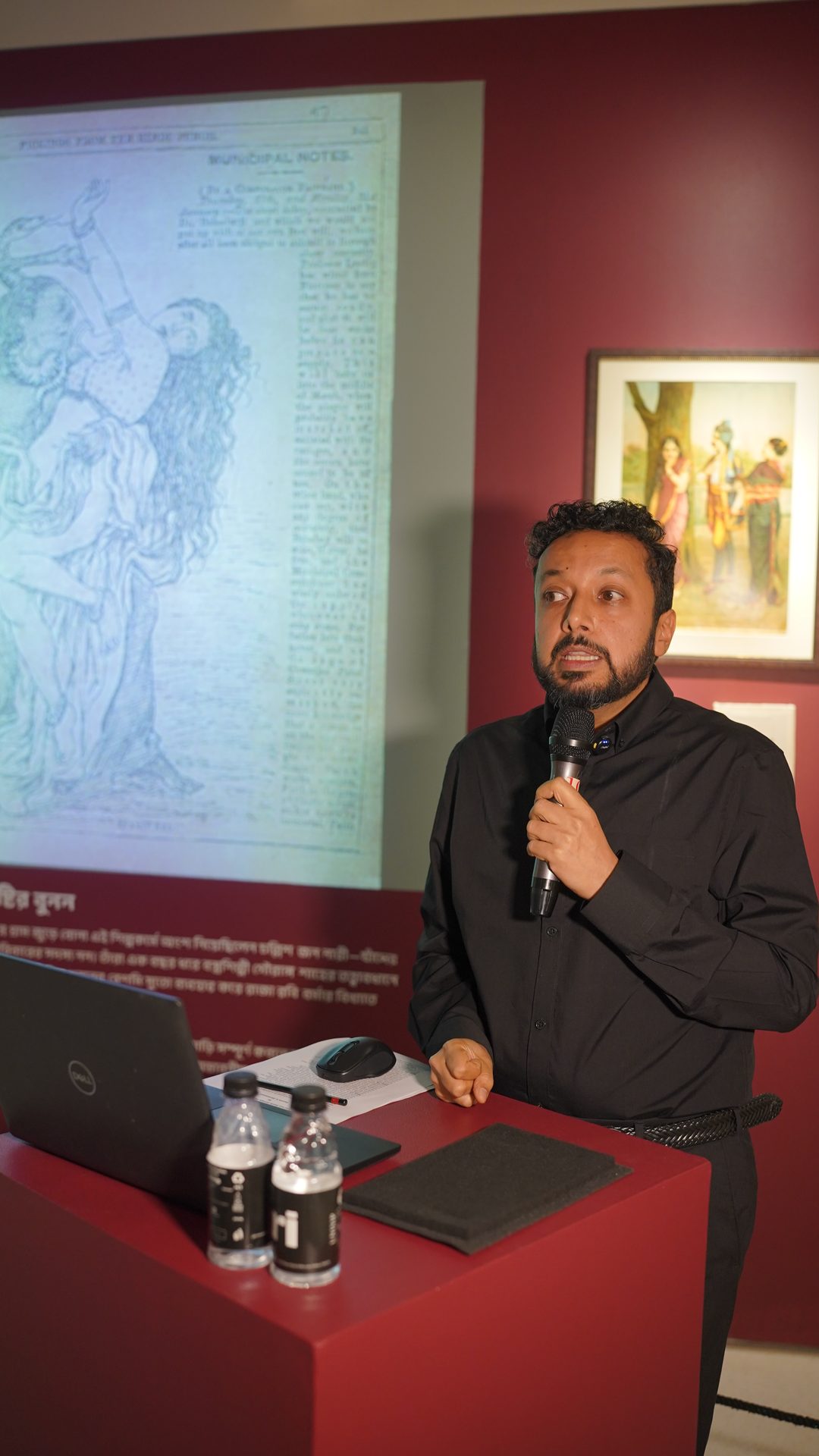
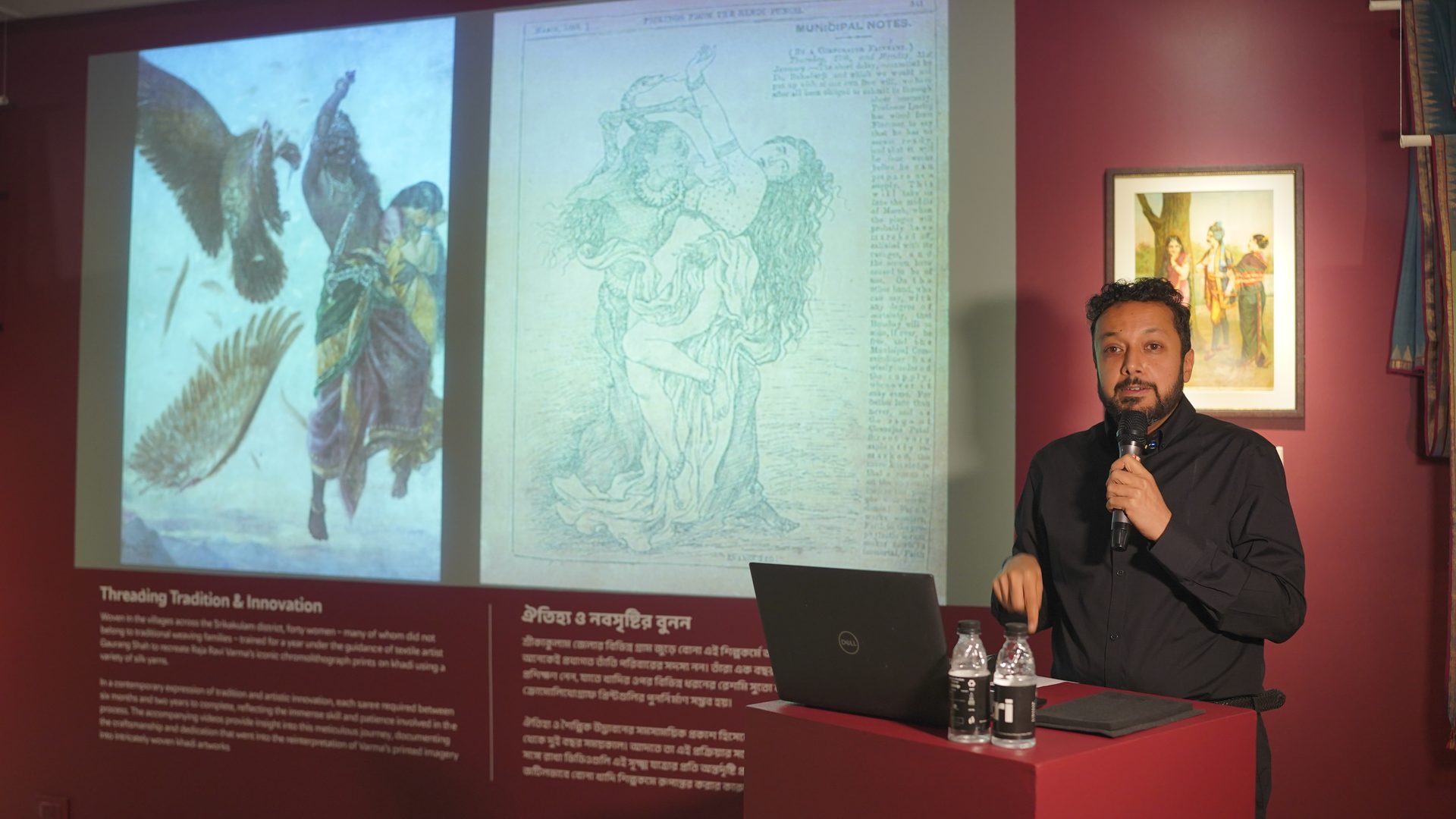
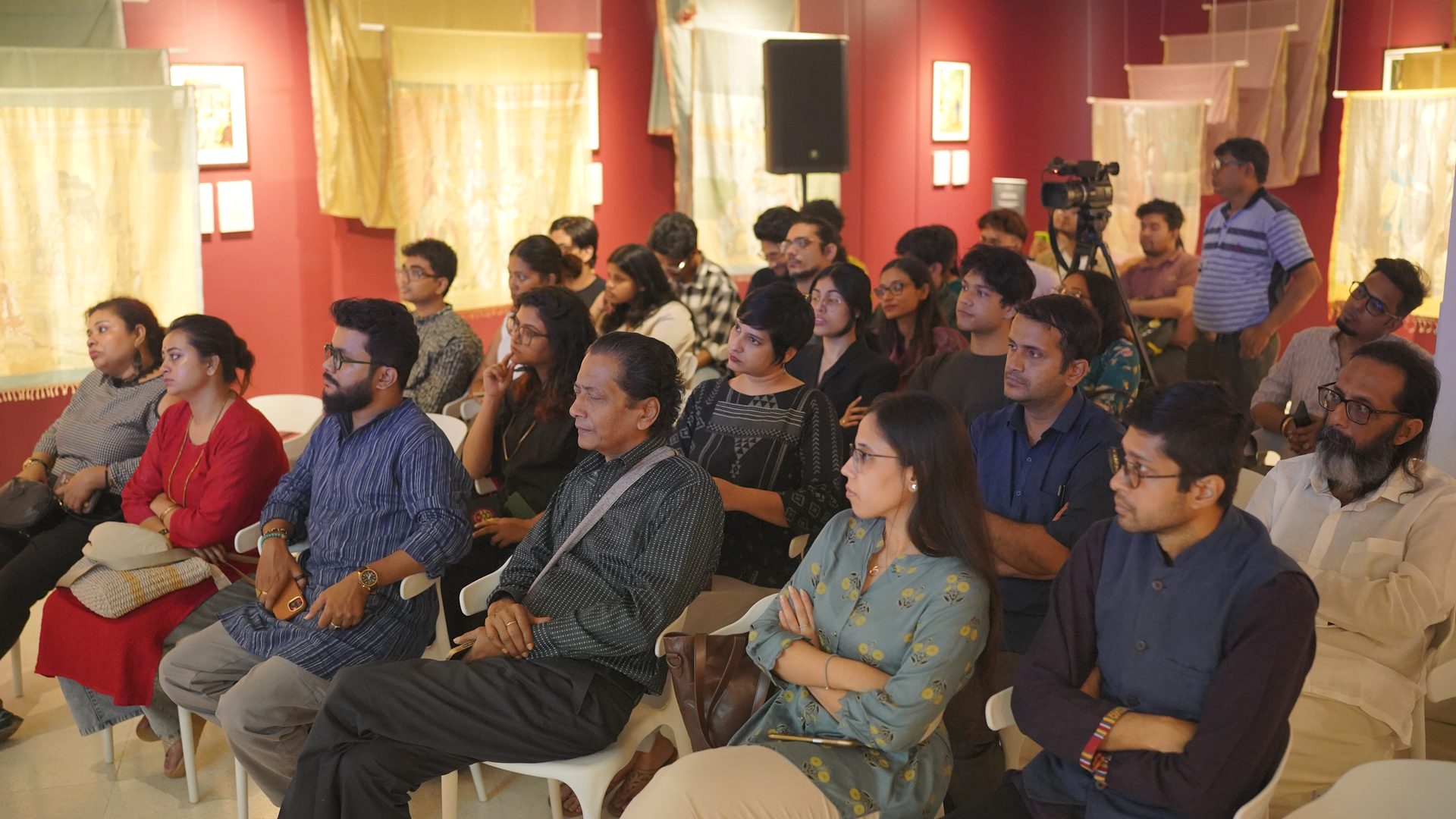
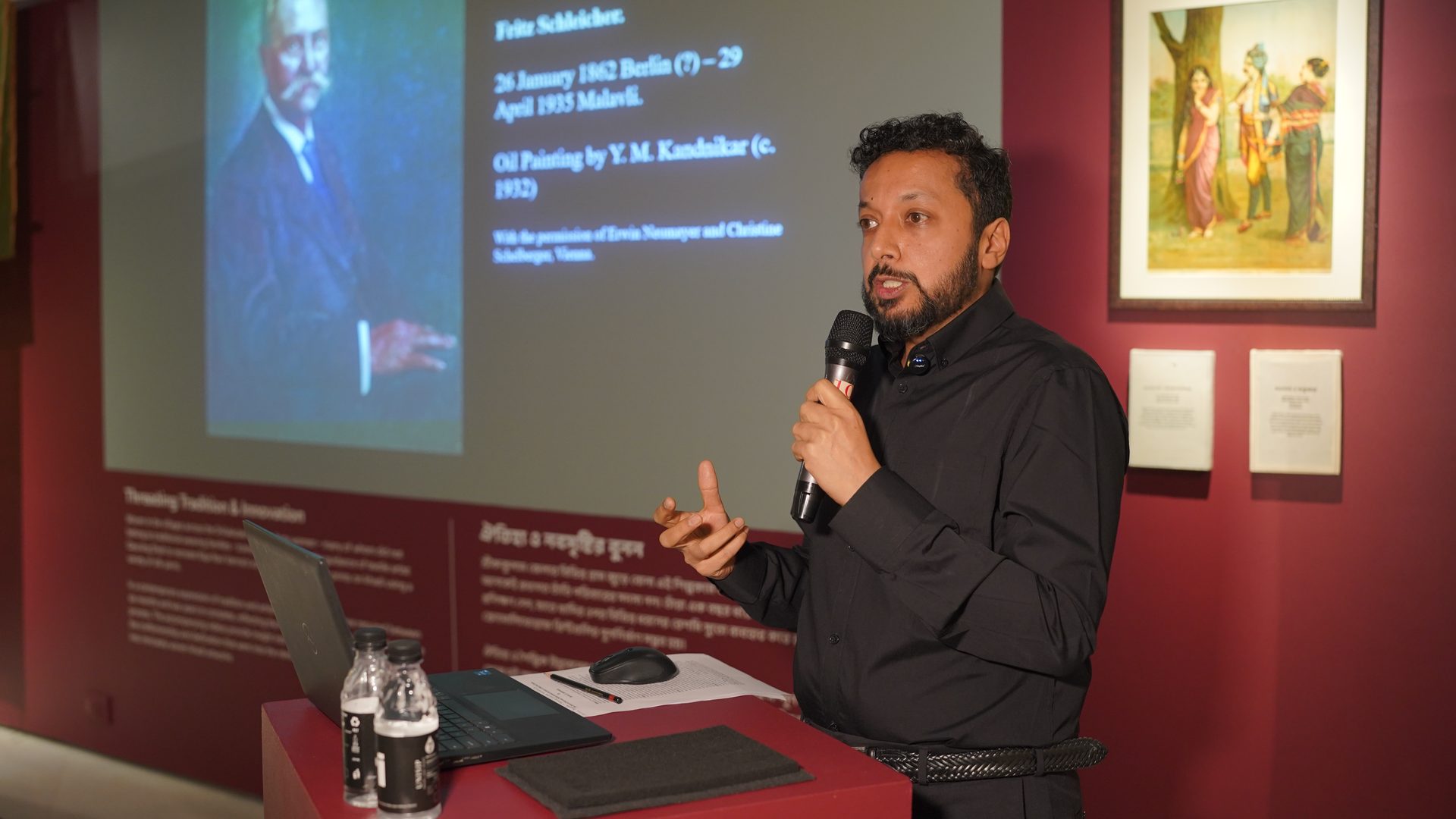
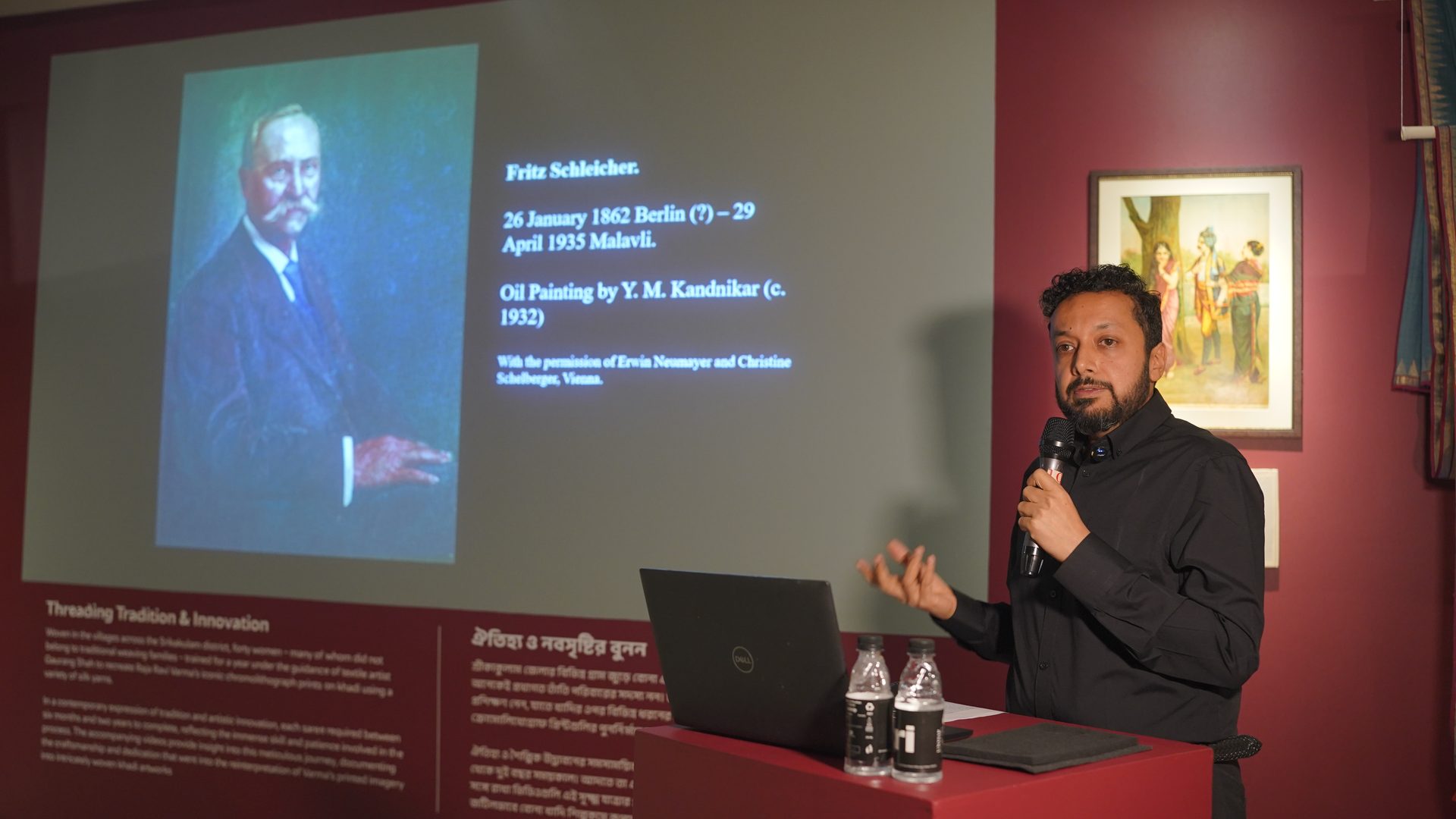
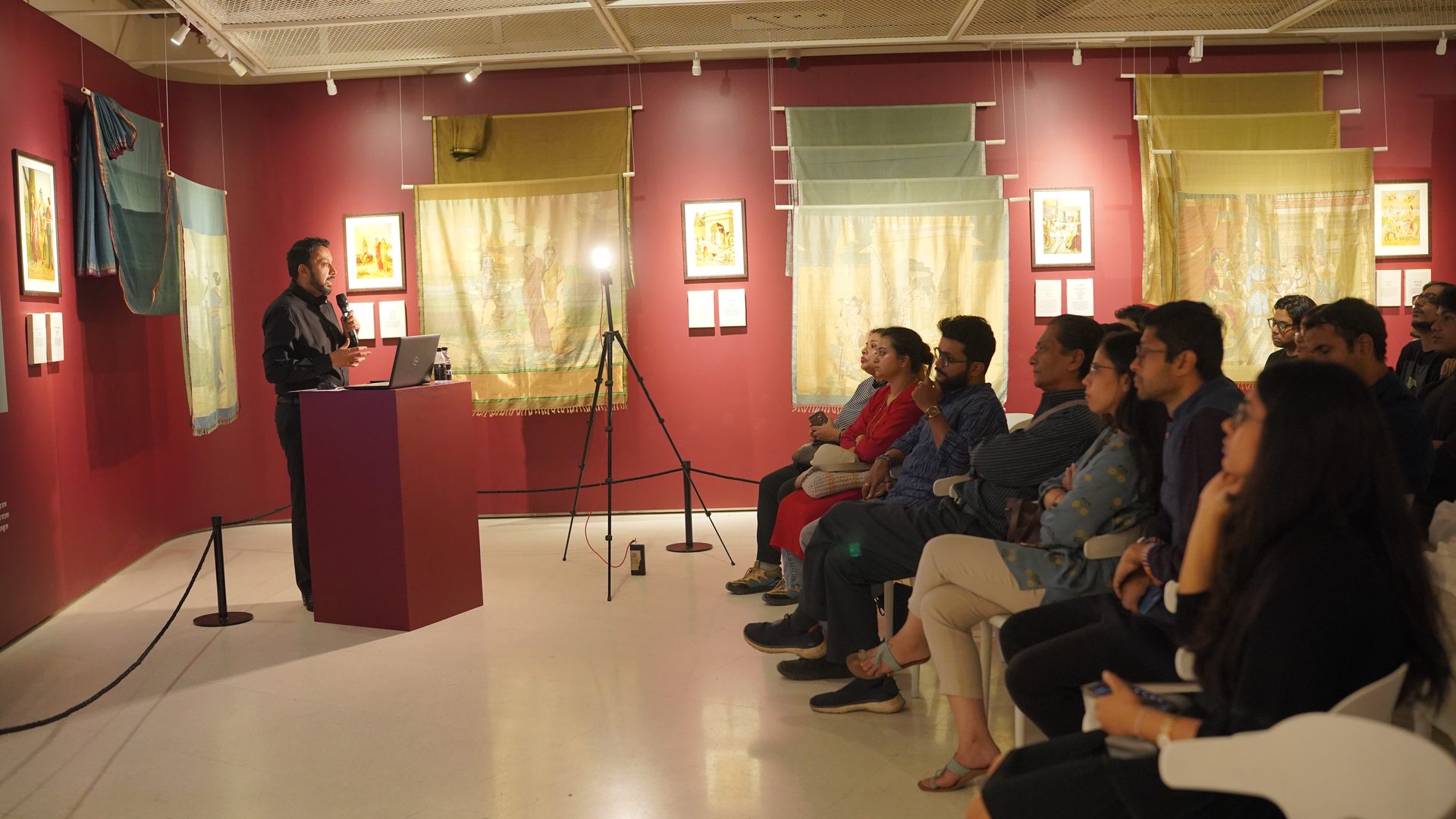
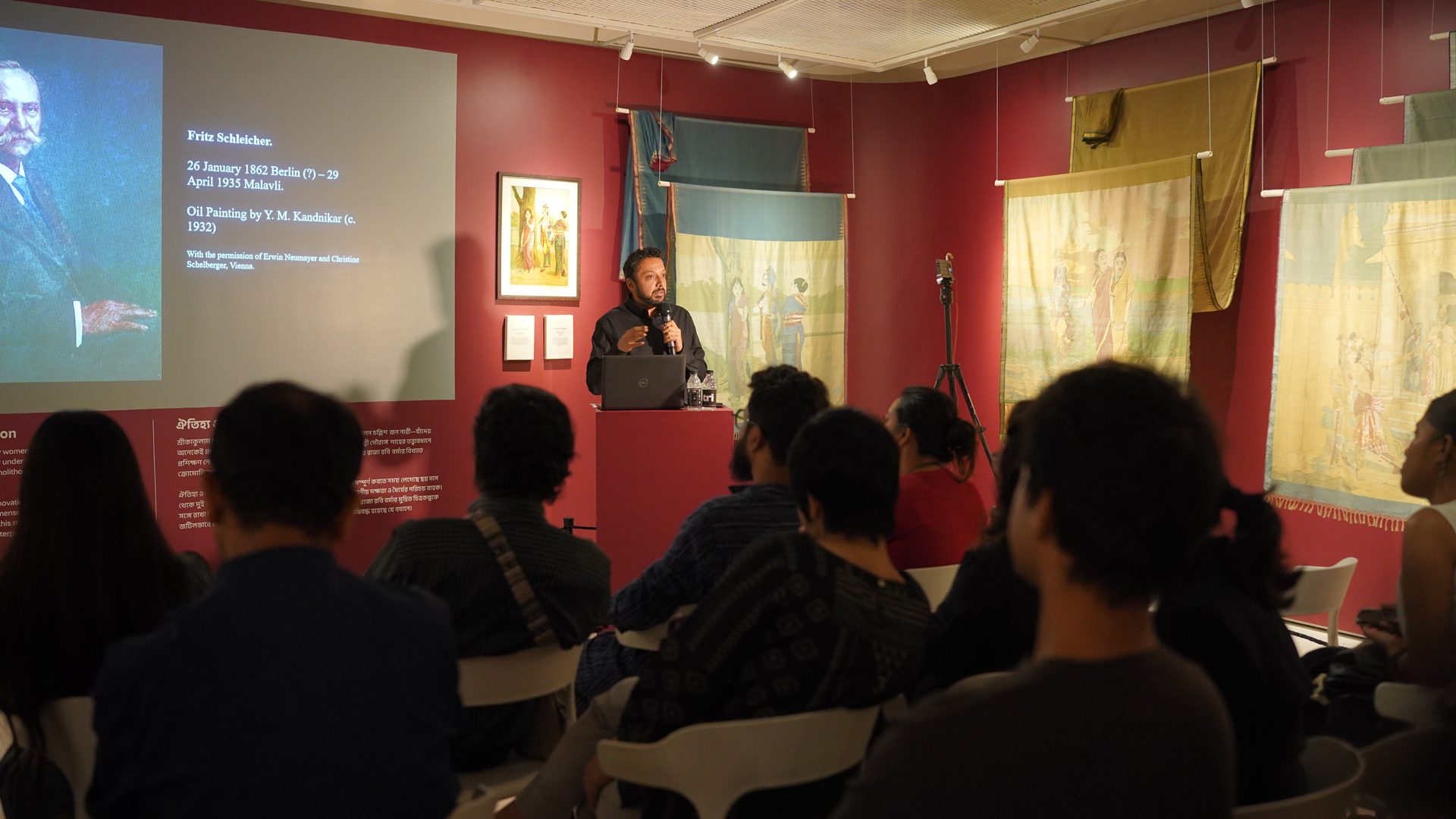
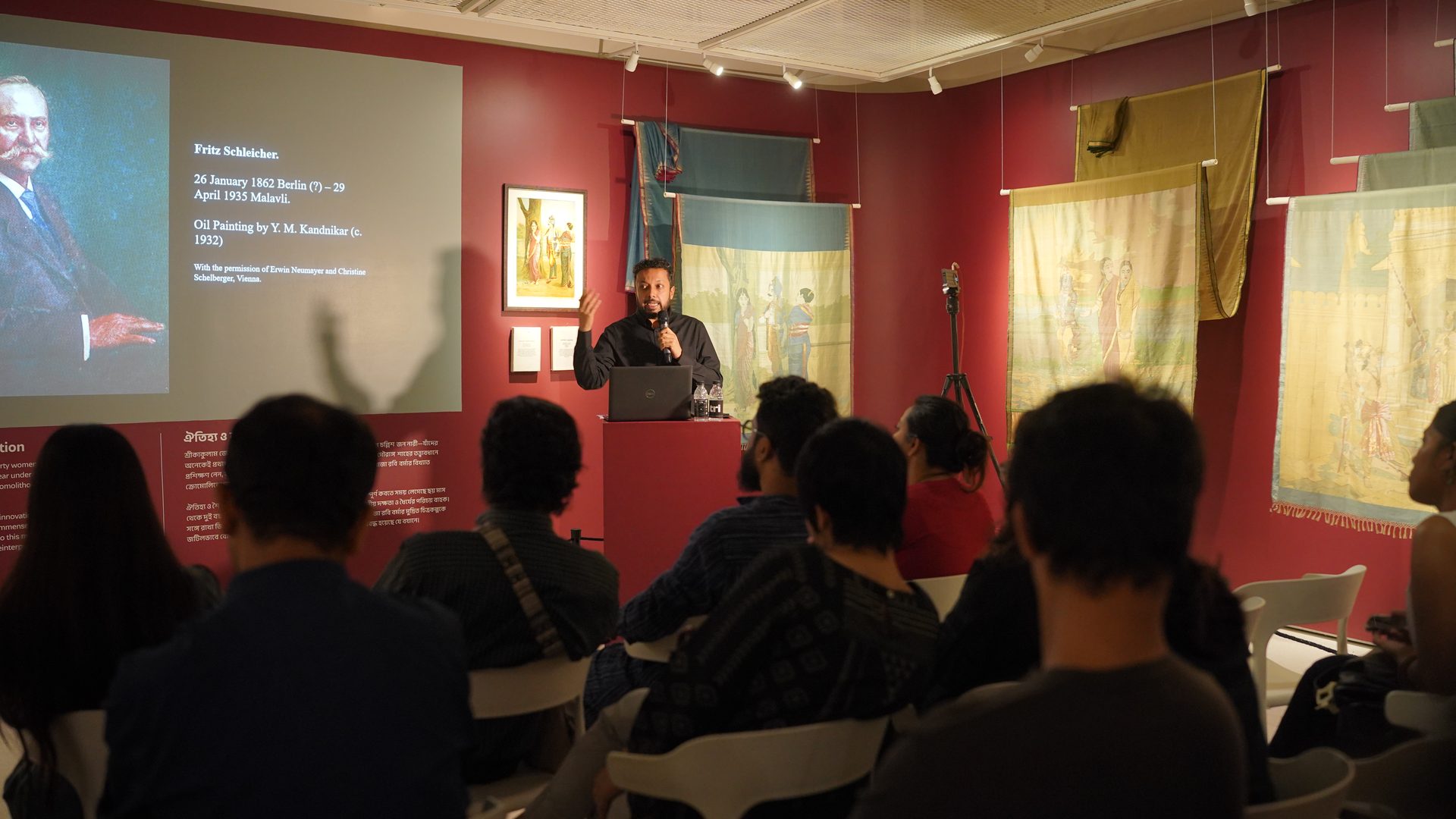
The Power of Print & Textile is a lecture by Ganesh Shivaswamy that explores printmaking and textile production through the lens of Raja Ravi Varma’s legacy.
Shivaswamy came to possess his first Raja Ravi Varma print at the age of thirteen, an acquisition that would inspire a lifelong engagement with the Father of Modern Indian Art, encompassing scholarly and curatorial pursuits across decades. His sustained research has culminated in the six-volume publication Raja Ravi Varma: An Everlasting Imprint, an anthology that showcases Varma’s legacy and solidifies Shivaswamy’s academic authority on the artist. As custodian and curator at the Sree Chitra Art Gallery, home to one of the largest living archives of the Raja Ravi Varma Lithographic Press, Shivaswamy plays a pivotal role in preserving and interpreting Varma’s material history. His collaborations with Google Arts and Culture have further extended the reach of Varma’s work to increasingly broad and diverse audiences.
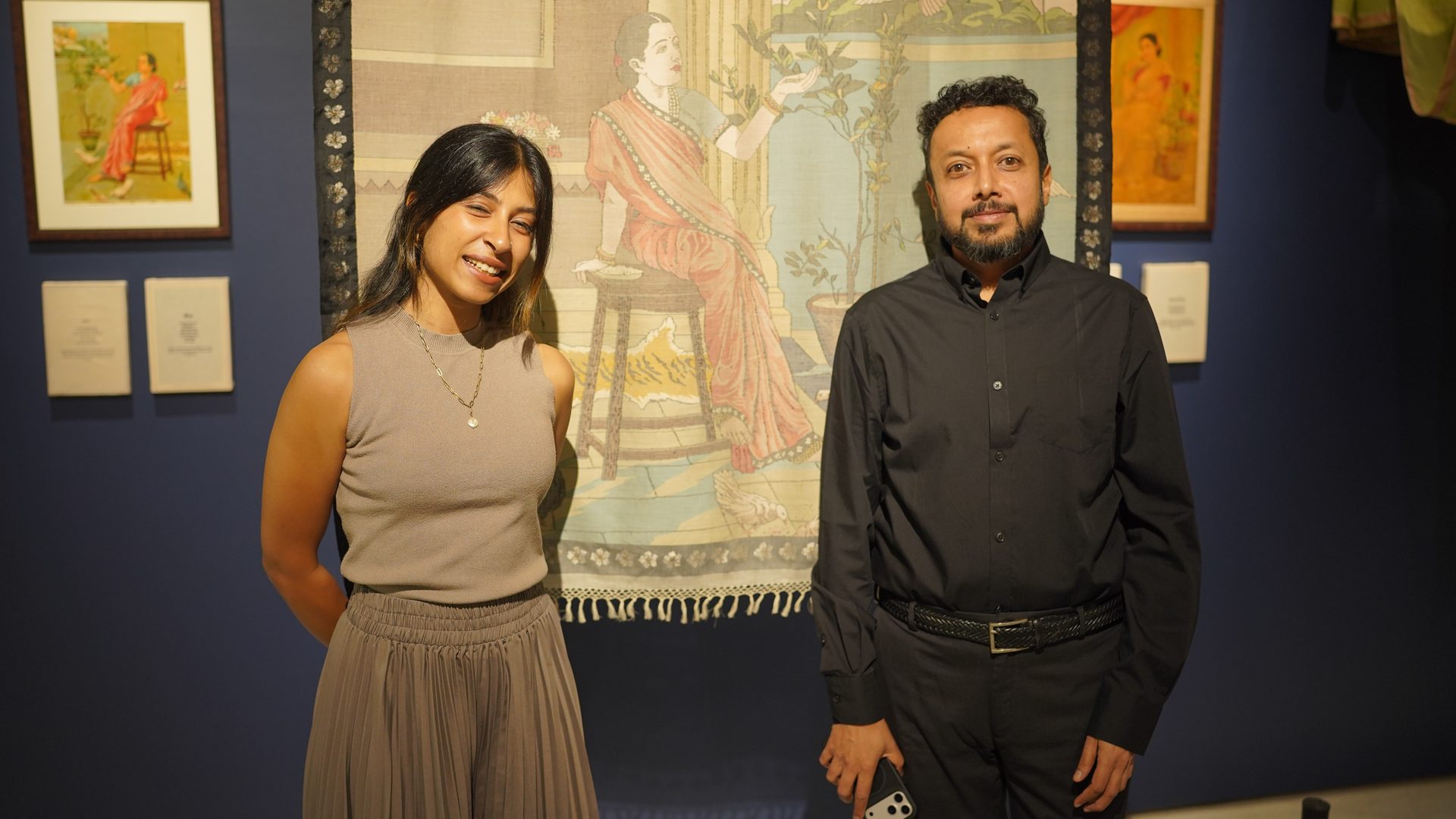
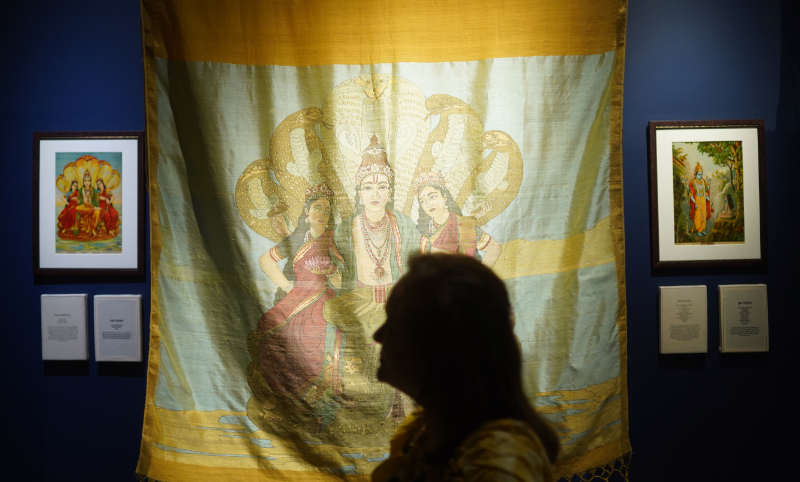
Presented against the backdrop of Khadi, a Canvas, TRI’s spring season exhibition in association with Abheraj Baldota Foundation, Shivaswamy traces the wide circulation of Varma’s chromolithographic prints, revealing how the artist’s paintings were translated into mass-produced images and how the press grew in both scale and ambition to reach audiences far beyond elite patronage. The lecture elaborates on the ways in which Varma’s distinctive visual language, its style, form, and iconography, came to appear in advertisements, calendars, and relics of popular culture, before connecting this history of print to the contemporary adaptation of Varma’s iconography across the intricate Jamdani-woven khadi saris featured in the exhibition.
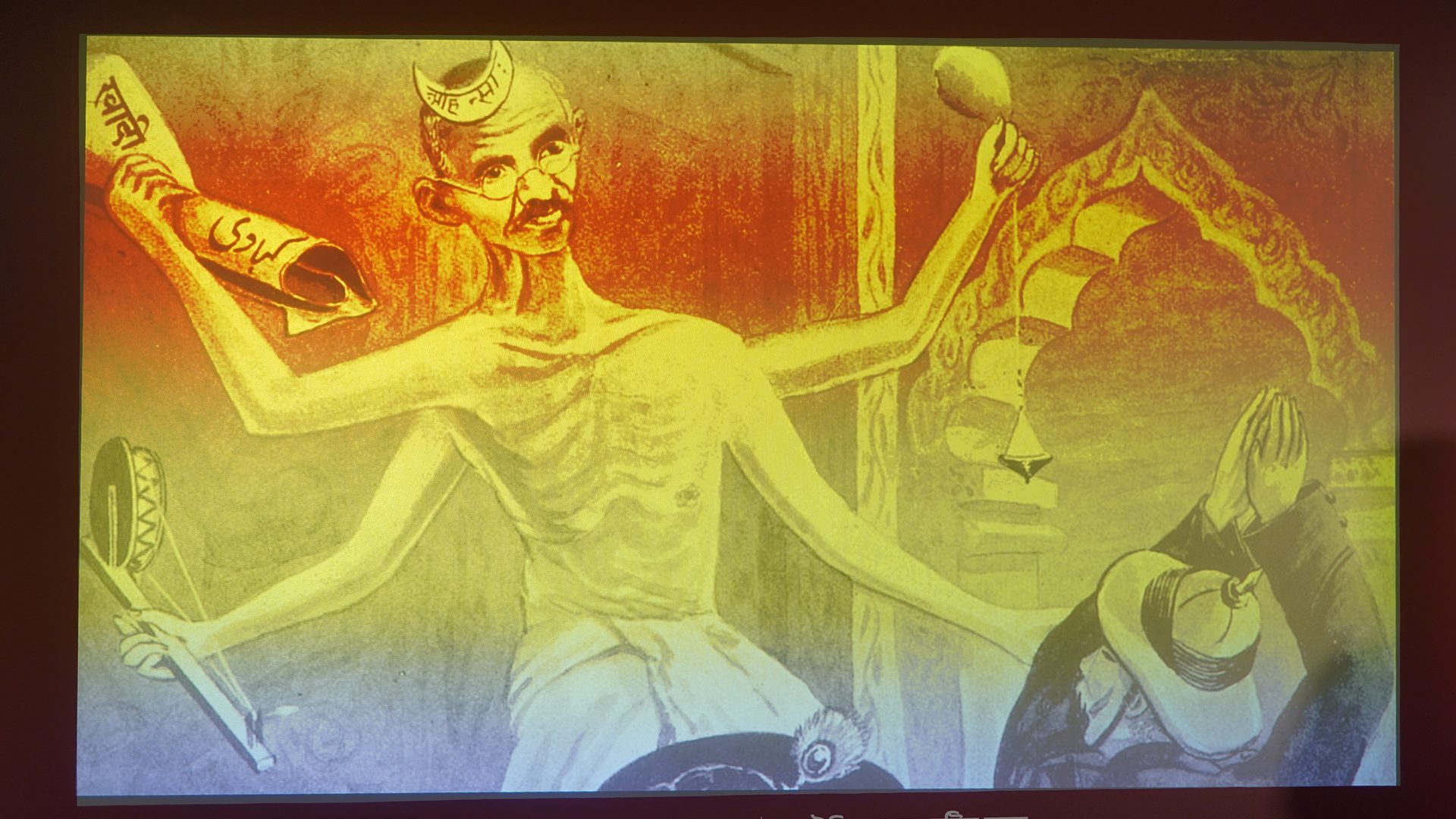
By placing Varma’s printed iconography in dialogue with Mahatma Gandhi’s Swadeshi movement and call for self-reliance, the presentation considers two parallel material revolutions: the democracy of printmaking and the social potency of khadi. Placed side by side, these mediums reveal how reproducible images and hand-spun cloth have instrumentally shaped the modern Indian identity by circulating aesthetics, ideology, and belief through forms that were accessible, intimate, and deeply transformative.